Wine & Soul
Pinhao Valley, Cima Corgo, Douro Valley
September 2, 20113
 |
| Sandra Tavares da Silva, winemaker and vineyard caretaker of Pintas at Wine & Soul |
If you have been reading my other writings on Portugal you already know 2011 is a spectacular vintage. We were lucky to taste the 20011s from Wine & Soul and they are spectacular. We even got a peak at the 2012 Pintas and Manoella VV out of barrel. In my opinion the 2011 Pintas red was the most exciting red wine we had our entire trip. This young wine was tight, but showed good intensity, full of verve and energy. The Pintas Vintage Port was sublime, complex and one of the best VP I have had to date from 2011. It was more wine-like as it seemed more reflective of terroir as there were streaks of earth and minerality that cut against the sweet black and blue fruits that finished off with a mint and herbal tinge - super cool stuff for sure!
 |
| Vale de Mendiz, the vineyards of Manoella part of the Wine & Soul production. |
Sandra and Jorge also own Quinta da Manoella a few kilometers north of the Quinta. A much larger property at 70 hectares, Sandra mentioned she thinks the land making up Manoella was likely separate properties maintained by separate families over a century ago. There are hints to this theory all over the property. Many lagares were found on different sites of the property, leading one to think there were different owners as most owners only build lagares in one place on their property in their main building, not scattered all over the property. Olive trees bisect internal sections of the vineyards which is a traditional way in the Douro to mark your border with a neighboring property. Lastly, there were many different satellite Quinta-like buildings scattered about the entire property that could have passed for a main building in previous centuries. The property has been in Sandra and Jorge’s hands a few years and they are making progress each year, but a lot of work needs to be done to revive the old vines and buildings on the property. You can see the abandoned vineyards next to revived vineyards and see for yourself just how hard the work is to rebuild the schist terraces and then replant them with vines. I can see in 10 years Manoella being a magnificent estate when it’s up and running at full capacity.
 |
| The Quinta for Wine & Soul |
Driving to Wine & Soul that morning I did not know it, but the Pinhao Valley is probably the most revered section of Cima Corga in the Douro Valley as many of the best properties and Port producers have vineyards there. On the way to Wine & Soul we passed the beautiful Quinta do Noval estate. We also drove by many vineyards owned by Taylor’s as seen from the signs near the top of the vineyards. When we arrived at Wine & Soul, Sandra was there to greet us and asked if we wanted to see the vineyards first to which we said absolutely. A tall and graceful woman, Sandra was in her past a volleyball player and a model. However it was her upbringing on a farm outside of Lisbon that inspired her to take up winemaking. You can read more about Sandra here (LINK).
 |
| Schict rock, just one of the examples of the type of top soil you see in the Douro vineyards: rocks |
 |
| Pintas vineyard with schist rock scattered amongst the 30+ mixed grape varieties planted here. |
 |
| Sandra discussing the Pintas vineyard, its soil, geology and why there are 30+ mixed grape varietals planted there. |
 |
| Pinhao Valley from the top of the Pintas vineyard, a favorite photo of mine. |
 |
| Pintas vineyard terracing. |
We headed out to the Pintas vineyard which was a few minutes’ drive north of the Quinta. We hopped out of Sandra’s SUV and almost immediately your feet were embedded in thick fine dust that was easily an inch or more deep as we approached the vineyard from the top. The fine dust seemed to be decomposed schist as that is basically what every vineyard is planted in and what every terrace is made from in the Douro. As we made our way further down into the vineyard, the dust disappeared quickly as it seemed to collect there in the upper entrance of the vineyard. As we got down into terrace 2 and 3 there was no dust, but hard igneous schist and broken pieces of schist. There was little to no soil, this was it. I asked Sandra where the soil was and she said this is how it is in the Douro. This being the first vineyard we could walk through in the Douro, it was an eye-opener. These vines struggle to find water in the schist rock the vines live in, so the old vines thrive in a viticultural way producing few bunches of super complex fruit. By “thrive viticulturally”, I mean the vines are very stressed and actually do not thrive as they do not produce a lot of fruit. However, the fruit that is produced is very complex as that little bit of fruit gets all of the energy of the vine. In many parts of the world, this process is manipulated by hand cutting off bunches of grapes in what is called a “green harvest” which removes grape bunches from vines to manually drive more energy into fewer grape bunches. In the Douro the vines are actually stressed like crazy reaching 30-40 meters (100 feet!) into the solid rock to find pockets where rain water settles. Imagine planting a grape vine in a 100 foot deep block of fractured and splintered concrete because that is what it is like, crazy!
I learned some very important facts about diversity and age from my discussion with Sandra about the Pintas vineyard (and many other Douro vineyards). The grape varieties are 30+ different indigenous Portuguese grape varieties. The reason why they are all different is the farmers that originally planted these vines wanted to be sure they could get fruit in every vintage as some vines in their youth were less resistant to extremes and disease than others so by having many different varieties that have different resistances, the diversity allowed the farmers to harvest fruit at least every year. If you only planted 1 vine that was not resistant to extreme heat, if there were heat waves that vintage the entire crop could be lost and be disastrous for a farmers well being. With proper care and attention, these old vines grew older and even further resistant to weather extremes and disease. They are not invincible, but are much stronger when they are older as they have built up resistances to extreme conditions.
I learned some very important facts about diversity and age from my discussion with Sandra about the Pintas vineyard (and many other Douro vineyards). The grape varieties are 30+ different indigenous Portuguese grape varieties. The reason why they are all different is the farmers that originally planted these vines wanted to be sure they could get fruit in every vintage as some vines in their youth were less resistant to extremes and disease than others so by having many different varieties that have different resistances, the diversity allowed the farmers to harvest fruit at least every year. If you only planted 1 vine that was not resistant to extreme heat, if there were heat waves that vintage the entire crop could be lost and be disastrous for a farmers well being. With proper care and attention, these old vines grew older and even further resistant to weather extremes and disease. They are not invincible, but are much stronger when they are older as they have built up resistances to extreme conditions.
 |
| The sun shining over Manoella and its grand terraces. |
 |
| A mortório , or ghost vineyard, where terracing remains but the vines are long gone and in some cases being readied for replanting. |
 |
| "this is how it is in the Douro" the typical cross section of the schist rock vines are planted in the Douro Valley. |
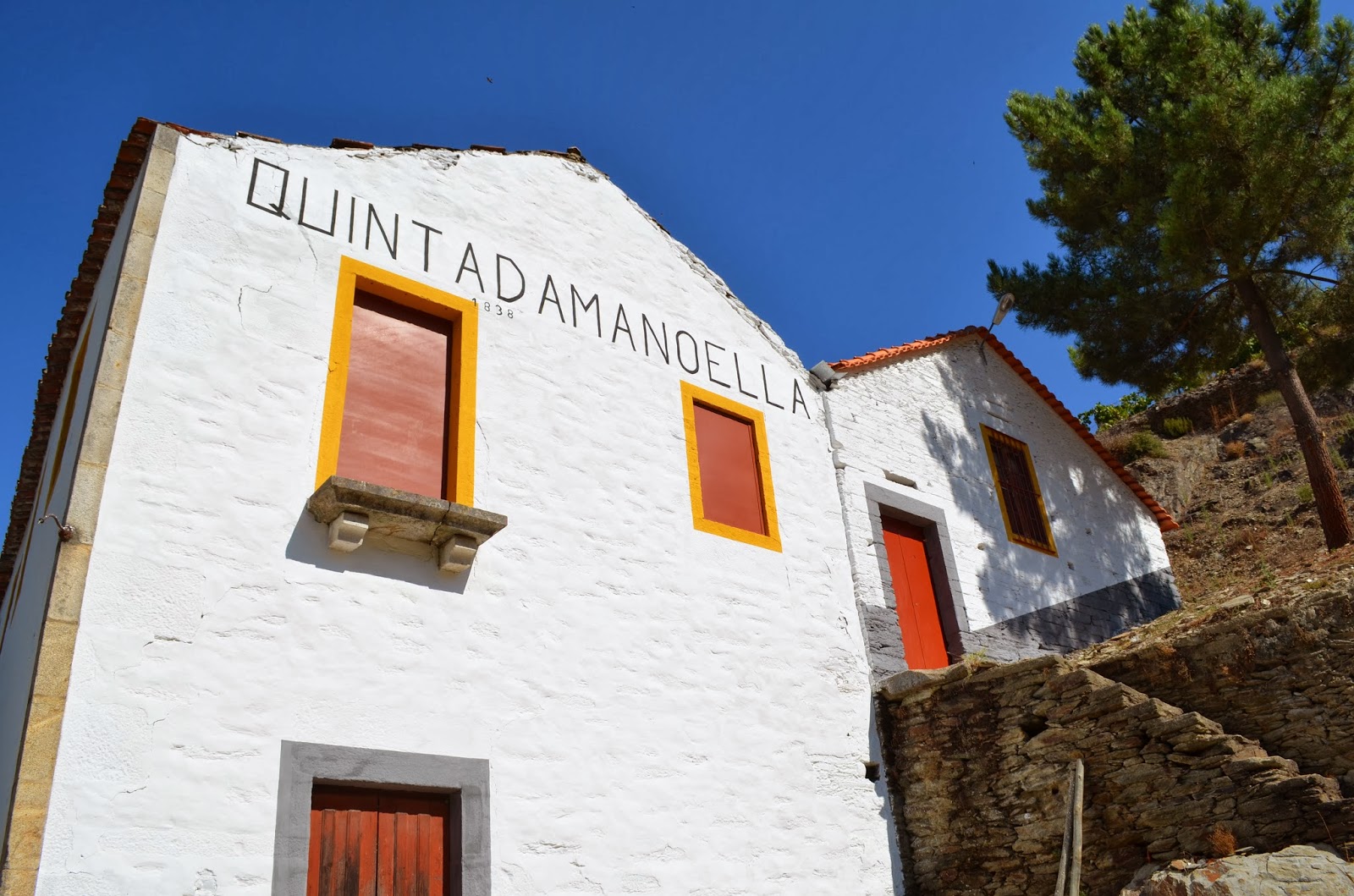 |
| Quinta da Manoella in the midst of an upgrade for use as a wine making facility. |
 |
| Manoella vineyards |
 |
| Sandra schooling us on the old vines at Manoella that range in age from 100 to 120 years old. |
 |
| One of the small buildings scattered about Manoella |
We got back in Sandra's SUV and drove a few more kilometers north to Manoella and started at the top of the property and made our way by SUV down into the heart of the property. As we switch-backed our way down steep and rocky roads, we stopped on the way by an old vine mixed varietal vineyard similar to Pintas. 30+ varieties are planted in this vineyard with the oldest vines being 100-120 years old. Still, they produce spectacular fruit as witnessed in the old vine bottling of Manoella. As we spoke, I was tapping into that passion that drives great winemakers like Sandra. Every great winemaker no matter where they are from has this passion. Our hands were flying in the air as we talked about the property, viticultural and winemaking practices, places where we have visited in the world where great wine is made, and what kinds of wines we drink. We hopped back in the SUV and headed to what will be a functioning Quinta soon after it is renovated so it can house wine production. Sandra also mentioned how she wants to upgrade some of the other buildings on the property to host visitors to the Douro which I think is a fantastic idea and hope is realized by the time we make our way back.
I cannot recommend a visit to Wine & Soul more if you make it to the Douro or come across their wines in your wine shop. If you are so inspired, you can even find the wines here in the US on wine-searcher.com and have them shipped to your home as they are not easy to find, but fairly readily available in large markets like New York.
 |
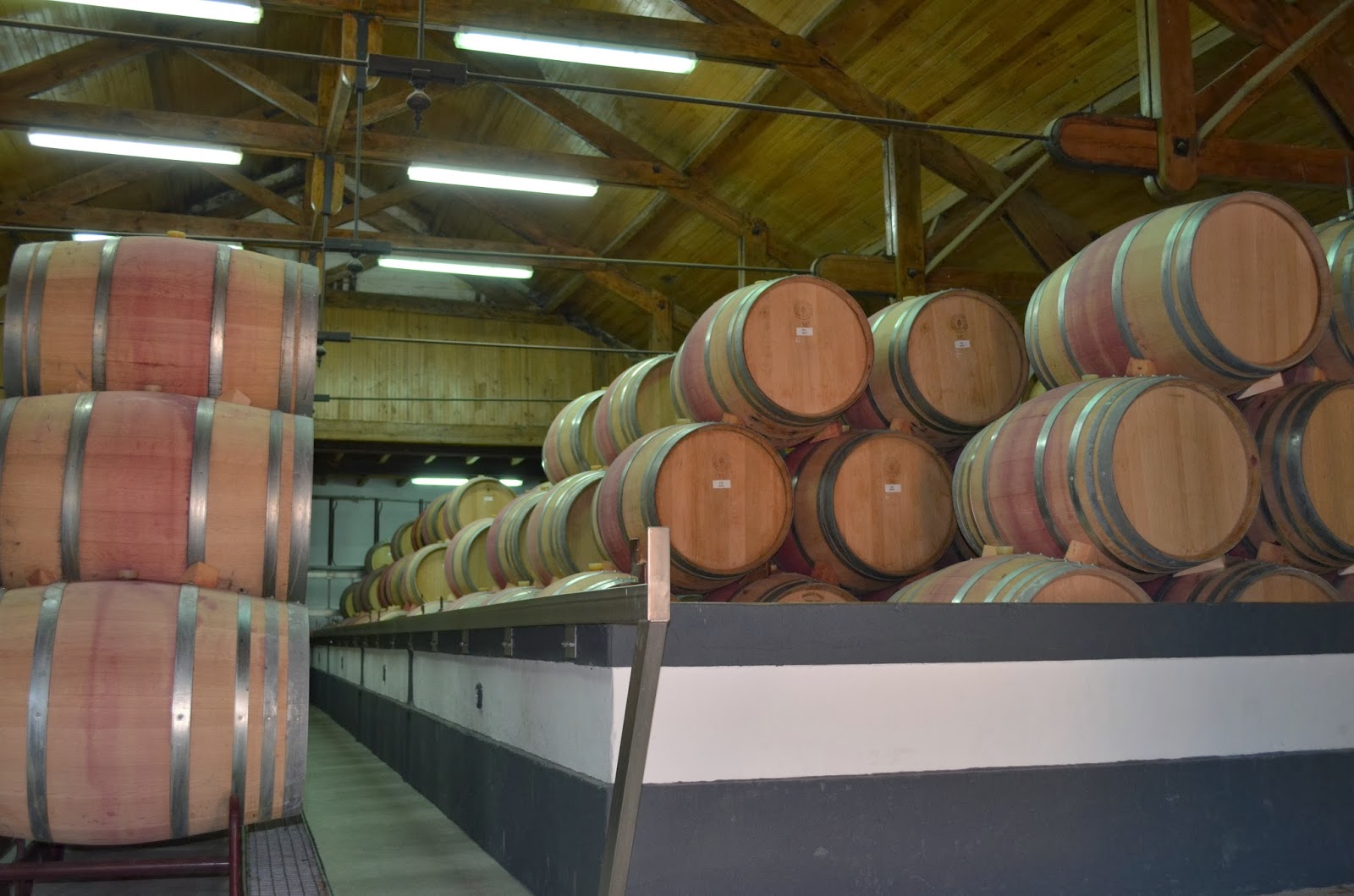
| A Taransaud French oak barrel aging Pintas wine. |
 |
| Steel fermentation tanks |
 |
| Sandra discussing one of the wines, Lisa listening intently, me taking notes on my iPhone. |
 |
| A better view of Wine & Soul's Quinta, with beautiful Pinhao Valley in the background. |
 |
| 2012 Guru Branco; 2011 Pintas Character red; 2011 Pintas red (flagship); 2011 Manoella & 2011 Manoella VV |
Bright and fresh, limes, lemons, apple and pear fruit emerge from a medium to full-bodied white that shows good oak integration and the mild treatment used to vinify this wine. One of my favorite whites the entire trip, the Guru is a world class white wine; the 2011 I had over a dinner one night reminded me of a good village or 1er Cru Meursault. Old vine field blend white wine; 5,000 bottles production; barrel fermentation takes place in 100% French oak ranging from neutral used barrels to light toast new French oak.
2011 Manoella Douro Red (Tinto)
Black licorice, blackberry, tobacco and spice, fine and ripe tannins, full bodied with an ample finish; Aged for 16 months in used barrels; a blend of 60% Touriga Nacional, 25% Touriga Franca, 10% Tinta Roriz and 5% Tinta Fracisca; fruit hails from the young vines 35 years in age; 10,000 bottles in annual production.
Black licorice, blackberry, tobacco and spice, fine and ripe tannins, full bodied with an ample finish; Aged for 16 months in used barrels; a blend of 60% Touriga Nacional, 25% Touriga Franca, 10% Tinta Roriz and 5% Tinta Fracisca; fruit hails from the young vines 35 years in age; 10,000 bottles in annual production.

2011 Pintas Character Douro Red
Elegant but well structured with purple flowers, red cherry, black currant, blueberries, and spice; nice length and good tannic structure. This is no slouch and a baby so let this one decant for 2 hours. 30% of the wine is raised for 18 months in new French oak, the remaining goes into neutral oak for the same time. From 70 year old vines, this is one of the better second wines in the Douro.
2011 Pintas Douro Red (Tinto)
Super young and tight, the nose and palate reveal blueberry, blackberry, violets, crème d’cassis, and some subtle spice, a firm and profound structure with a round palate texture, acidity gives this good freshness and focus, great length on the long finish. If you love Bordeaux or great Rioja this needs to be in your collection immediately. This is the flagship wine made from the best grapes of the 70-80 year old vines of the Pintas vineyard. Pintas is approximately 5,000 bottles of annual production. 40% new French oak for 20 months, 60% in neutral oak for 20 months. This easily has 20+ years of aging potential.
Super young and tight, the nose and palate reveal blueberry, blackberry, violets, crème d’cassis, and some subtle spice, a firm and profound structure with a round palate texture, acidity gives this good freshness and focus, great length on the long finish. If you love Bordeaux or great Rioja this needs to be in your collection immediately. This is the flagship wine made from the best grapes of the 70-80 year old vines of the Pintas vineyard. Pintas is approximately 5,000 bottles of annual production. 40% new French oak for 20 months, 60% in neutral oak for 20 months. This easily has 20+ years of aging potential.
2012 Pintas Douro Red (Tinto) – Barrel Sample
A purple-red robe this is fairly developed for 11 months of age. Black and purple notes dominate with a nice perfume of purple flowers and red and black fruits. The tannic structure at this time hints at having sweeter and finer tannins than the 2011 that has the structure of a skyscraper. It finishes pure and long, with good fruit, acids and tannin.
A purple-red robe this is fairly developed for 11 months of age. Black and purple notes dominate with a nice perfume of purple flowers and red and black fruits. The tannic structure at this time hints at having sweeter and finer tannins than the 2011 that has the structure of a skyscraper. It finishes pure and long, with good fruit, acids and tannin.

2011 Manoella VV Douro Red (Vinhas Velhas aka Old Vines)
A field blend of more than 20 indigenous grape varieties, the Manoella VV shows good terroir as this has an elegance and transparency facet coupled with good depth and concentration; 50% new oak for 20 months is well integrated as this wine soaks it up well; red and black fruits, leather, earth, spice and minerality. There is approximately 3,000 bottles in annual production and this wine hails from the first old vineyard we saw at Manoella.
A field blend of more than 20 indigenous grape varieties, the Manoella VV shows good terroir as this has an elegance and transparency facet coupled with good depth and concentration; 50% new oak for 20 months is well integrated as this wine soaks it up well; red and black fruits, leather, earth, spice and minerality. There is approximately 3,000 bottles in annual production and this wine hails from the first old vineyard we saw at Manoella.
2012 Manoella VV Douro Red – Barrel Sample
The youthful barrel sample of 2012 Manoella VV was also showing nicely for it youth. Earthy, with dried fruits, a dustiness persisted in the palate from the tannins, again there was this very transparency in the wine, showing well for the 2012 vintage which was not as successful as 2011.
2011 Pintas Vintage Port
Roasted herbal notes, minty even with black kirsch and anise spice, a very complex and layered vintage port (VP), Black and dark red fruits add to the spice and fan out over the palate with a striking texture that is more wine-like than Port. A long, silky, fruit and herb infused finish echoes for minutes on the palate. One of the best and most unique VPs for 2011 that I have tasted to date.
Roasted herbal notes, minty even with black kirsch and anise spice, a very complex and layered vintage port (VP), Black and dark red fruits add to the spice and fan out over the palate with a striking texture that is more wine-like than Port. A long, silky, fruit and herb infused finish echoes for minutes on the palate. One of the best and most unique VPs for 2011 that I have tasted to date.
NV Wine & Soul 10 Year Tawny Port
A well balanced and texturally smooth 10 year tawny showing orange peel, creme caramel, spice and creme brulee; Medium bodied, this finishes really smooth and balanced for a 10 year tawny, I would guess at least a 20 year tawny blind.
A well balanced and texturally smooth 10 year tawny showing orange peel, creme caramel, spice and creme brulee; Medium bodied, this finishes really smooth and balanced for a 10 year tawny, I would guess at least a 20 year tawny blind.
A bientot,
Tom