Showing posts with label tom's wine forum. Show all posts

Sunday, March 23, 2014


Esporao


The Gentle Ecological & Viticultural Giant

Reguengos de Monsaraz

Alentejo, Portugal


Vineyards and the estuary at Herdade Esporao


     Our last appointment of the day was deep in the far south east section of the Alentejo region at the enormous Herdade Esporao. We were only miles from the border with Spain, so many of the villages and Herdade in this region have a historical and architectural feel of battle fortifications like castles and stone forts for protection from the invading forces from Spain. The Romans settled here before those days and hints of the empire’s presence still stand, especially in the town of Evora where a Roman temple still stands about 40% intact in the center of the village. In the 20th century when Portugal was ruled by whom they still just call “The Dictator” and not by his name, Alentejo was deemed cattle country by dictator Salazar and where the country’s beef was sourced. Grapes were not much of a factor, if at all, in the middle 20th century. The land has a similar look and feel to California, with rolling golden hills, oak trees and grape vines. The major crop is still not grapes, in Alentejo it is cork. In fact most of the world’s cork come from the ancient oak trees that dot the landscape or grow in randomly patched of groves. The major difference to many other wine regions though is the extreme heat and dryness. In the summer, the heat is downright scorching with temperatures frequently rising above 100 °F.

California?  Nah, just Alentejo, Portugal


More California like landscape in Alentejo.

     From the highway, it was about a 25 minute drive to the Herdade at Esporao, and most of that was on their property. I have never seen a wine estate this large in all of my travels to wine regions. At 
1,860 hectares (4,600 acres!) the estate is roughly equal to the size of 2.5 Central Parks (New York City).  With 450 hectares under vine, there are 189 varietals planted.  The remainder of the property is mostly a protected biological ecosystem miraculously balancing and sustaining wildlife and agriculture simultaneously. 


     We were to taste the current portfolio of wines, enjoy a 4 course lunch paired with wine and then get a tour of this enormous facility. Bruno was our caretaker and took us to an outdoor seating to start the portfolio tasting. Now, of all the wines from Portugal I had tasted before our visit after Port wines the Esporao wines are those that I had the most recent experience with drinking. The Reserve and Private Selection wines are widely available and are great values from a pricing to quality ratio. The mono-varietals were my favorite group of wines, The Alicante Bouschet from that group was the top wine I tasted in the portfolio that day and one of the best wines of our trip (the Torre was down to the last few bottles so I was not able to try it). The Syrah was well made, reminding me more of a new world style than old world Rhone; while the wonderfully aromatic Verdehlo white wine could easily replace a summer white wine drinker’s favorite sauvignon blanc. The Douro wines from Quinta Dos Murcas were solid, with the Reserve bottling leading the way and a great value Douro blend called Assobio.

All 9 wines in the lineup!
     We moved on to lunch on a spectacular veranda overlooking the property with a wide view of the estuary in front of us. The setting was serene as the sun hung lazily overhead and friendly clouds passed by over the huge landscape. We chose some of the wines we had with the tasting to have with our meal, creating a wine pairing lunch that was one of the best we had on the trip. We also did a comparative olive oil tasting of the different varieties of estate grown olives found at Esporao. Unfortunately a thunderhead rolled in at the end of lunch but we had already finished moved on to the tour of the Herdade. 

Lunch on the veranda, what a view!

Olive oil tasting
Miguel Leal, tour guide and driver extraordinaire!
The main entree, Cod of course.
      We made our way with Bruno and Miguel to an SUV that Esporao took visitors in see the vineyards which at the time were being picked or were just about ready to be picked. We saw the last few baskets of Aragonez being picked in one vineyard and made or way to their experimental vineyard that had one row each dedicated to many of the grape varieties that dominate the world market currently. We saw Cabernet Sauvignon, Zinfandel, Pinot Noir, Nebbiolo, and Sangiovese to name a few. On our way back to the Herdade we stopped at the Herdade’s symbol, the castle like structure that stood watch over the land for hundreds of years. Nearby was the oldest living thing I have ever seen, an olive tree more than 2,000 years old. Its origin has been scientifically dated to a date in BC terms, meaning it was planted before the time of Jesus (AD), talk about a religious experience!


Bruno!


The Jesus tree, dates to the last few decades BC

     Back at the Herdade we made our way to the fermentation tanks where there was juice and must fermenting in many of the tanks as the picking had already started. Next we made our way inside to the rest of the tanks and bottle processing. The barrel rooms were huge and full of barrels of all types of toast and origin. The caves were deep underground and house the barrels and the wines in bottle that were resting before their eventual distribution around the world. Out back there were massive blending tanks stories high that were used to ensure proper consistency of the large volume blends Monte Velho and Defesa.

Red wine going through an initial soak, that is the must floating on top made of seeds and skins.


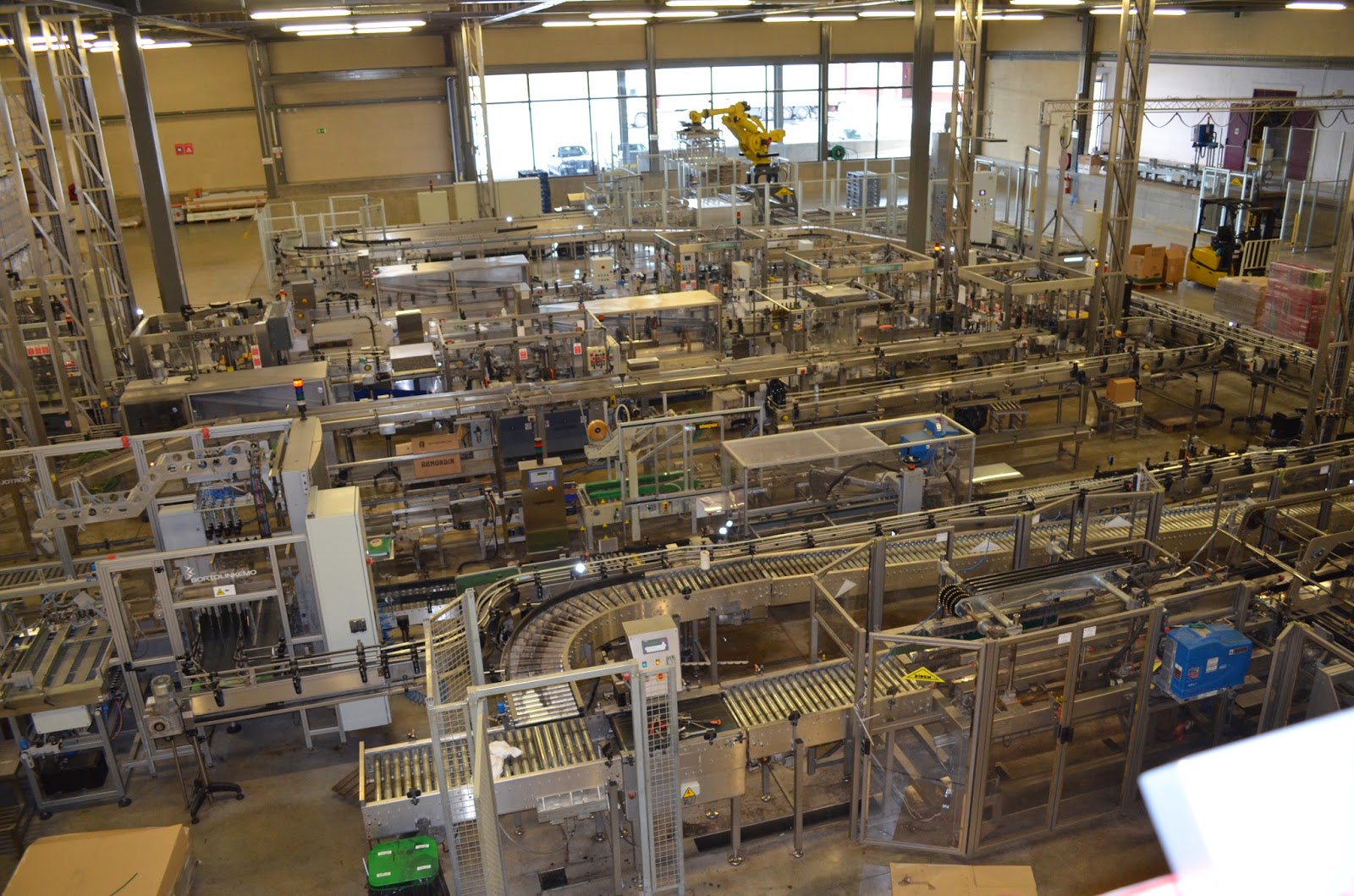
The bottling line at Esporao

Part of the barrel room below ground at Esporao.

The library of older back vintage Esporao wines

The caves below ground at Esporao, yes I tore that steel door off its hinges to get to the good stuff!

A sea of wine, yes, that is me next to the blending tanks for scale.

     As we finished up the tour, we thanked the wonderful people like Bruno at Esporao that made our visit and our tour spectacular and unforgettable.  


Farmers and producers of Alentejo wine, PLEASE grow more of this grape for your red wines, this very well could be THE grape that puts you on the map like Malbec did for Argentina.

I would like to finish here to ask the Portuguese in the Alentejo to seriously think about making Alicante Bouschet their main grape and to continue to plant and experiment with this grape that seems to be in complete harmony in this region.  When I look for an Alentejo wine in stores or in restaurants I look for one made exclusively or with a good majority of the Alicante Bouschet grape in the blend.  So should you wine reader!

A bientot!

-Tom


Here my notes on the wines we tasted that day at Esporao.


Duas Castas White 2012

Wet rocks, lime leaf, tropical and citrus fruits, medium bodied, medium + acids, 40% is aged in oak barrels for a few months; the grapes are a blend of Viosinho and Semillon 


Reserva White 2012
Medium oak impression in the nose, large and generous nose of sweet oak, apples and spicy pears, medium bodied, the palate shows brighter tropical notes and a touch of cream. Juicy and fruit filled finish. 6 months combined new French and American oak barrels


Private Selection 
White 2012
The most obvious oak of the group, but with a dry and long finish, complex and structured, good acidity and elegance on the tapering finish.  I would like to see this is 5-7 years.  95% Semillon, 5% Marsanne & Roussane.  This spends 6 months in new French oak


Assobio Douro Red, Quinta Dos Murcas
Douro sappy red fruit, gets the mouth watering, tobacco, cranberry and spice, simple and easy going; Douro blend of Touriga Nacional, Tinta Roriz, and Touriga Franca


Quatro Castas Red
Licorice, violets, pepper and spice, some green pepper notes, medium bodied with med + tannins; this is a blend of the following grapes: Touriga Franca, Tinta Miúda, Cabernet Sauvignon, and Alicante Bouschet


Quinta Dos Murcas Douro Reserva
Made in traditional foot tread lagares; aromas of blueberry, blackberry, black cherry, some teeny bits of smoke and leather, the palate has 
blood orange, juicy cherry and blackberries. A long and silky finish. Lovely and fine wine.


Syrah 2010
Juicy and floral, purple notes, chocolate even, med + tannins, medium to full bodied with good acidity, different Syrah like character, but meaty and juicy, lots of elegant purple notes.

Alicante Bouschet 2010
Solid wine of balance and depth, blueberry, boysenberry, a touch of mocha, cigar rapper and sweet tobacco. The blueberry and spice stretches through to a long and persistent finish. Easily the most unique and strong wine of the bunch.


Private Selection 2009 Red
Opulent, young, tight and complex.  An elegant nose of red and blue fruits, roasted herbs, a smidge of eucalyptus, black and blue fruits. Medium to full bodied, the finish sails on in bursts of fruit, silky and supple tannins. Well balanced for its size. 
18 month in new French oak barrel and 18 months in bottle.

Sunday, March 02, 2014

Cartuxa: Our First Wine Estate in the Alentejo Region of Portugal

Cartuxa
Alentejo: Evora, Portugal
"Cartuxa: The Charitable Wine Company"

Herdade Cartuxa in Evora, Alentejo
As we drove south from the Douro Valley we made our way on a highway that wound through the hilly northern part of Portugal to lower rolling and golden yellow hills in Alentejo.  We stopped half way for lunch and a brief tourist stop in Fatima to see the enormous site the Roman Catholic Church has built to recognize one of the few places the Virgin Mary has shown herself.  We had a fantastic lunch at Tia Alice where we had a fantastic Acorda meal that is the rustic traditional country dish of this region.  Tia Alice is the best restaurant in that region and the food backed that up.


Tia Alice in Fatima, a great restaurant to savor the regional cuisine
The main circle in Fatima where a monument dedicted to the children that saw the Virgin Mary
Pope John Paul II brass statue in Fatima
As we started to enter the outskirts of the Alentejo region, we started to see the crop the region is most famous for.  No, they were not grape vines but cork trees in many different stages of harvest.  Some were ordinary looking trees, many others were in different color ranges of red and brown, they look rust colored after the cork is peeled away and harvested.


Cork trees in the Alentejo
L'and, our home while in the Alentejo
Our headquarters in the Alentejo was at the great hotel L'And that was a well appointed hotel with fantastic amenities a short drive west of the historical city of Evora: an excellent restaurant, infinity pool, huge rooms, their own wine production, spa and our favorite part was the retractable skylight over the bed.  The skylight could be retracted to where it was just a screen and you could see all of the starts at night as you nodded off to never never land.


Skylight over your bed?  Yes please! 
Welcome to Cartuxa! 
Inside the old Herdade where wine is no longer made but some of the wines age here in tank.
On our first full day in Alentejo we had 2 appointments, with the first one at Cartuxa near Evora.  We watched a video about the winery, its rich history and its impressive charity work for the poor children within Portugal.  The winery itself was in a labrinth built in stages over time as separate parts of the structures are of varying styles and the current materials from the time they were created.  


Angela showing us how to use the aroma stations.
A unique part of the tour took us to an aroma station where the 4 most prominent grapes in Alentejo where described and the aroma simulated with the typical scents of the wines.  I thought this was a great way for people, novice or experienced, to better understand the grapes and what they offer in flavor and aroma.

As we concluded the tour, we headed into the tasting room to sample the wines.  We had 3 different olive oils 4 wines to waiting for us to try.  Our guide Angela Fernandes was an excellent guide telling us the stories of the estate and the production methods to make these fantastic quality wines.


Angela and I concluding the olive oil and wine tasting.
The three olive oils were the EA label to which the basic introductory wines also are labeled as EA.  The Cartuxa label was a smooth and fruity olive oil with a butter texture, while the Alamos was spicy, peppery, floral and fruity with a vibrant green color.

Here are our tasting notes from the wines:

Floral de Evora Branco Colheita 2010
Grape variety: Assario
Fresh lemons, pineapple, tropical with good acids, some minerality, super mid palate full of nice texture, a clean and mineral driven finish
Steel fermentation and only on the yeasts, the battonage adds a nice medium bodied texture to what would be a steely, leaner feeling wine if not for the sur lie.

EA Reserva Tinto 2011
Half of this wine sees 4-6 months of oak aging; 2/3 new French oak the remaining 1/3 are neutral oak barrels
Grape varieties:  Aragones, Syrah, Alicante Bouschet
Fresh and bright red fruits, supple tannin, decent acidity

Cartuxa Tinto Evora Colheita 2010
Grape varieties: Alicante Bouschet, Trincadera, Aragonez (aka Tempranillo)
Elegant, but spicy red fruits like raspberry and black cherry; very dusty medium grain tannin, mocha and subtle spice too.  A long and fresh finish, very nice wine.
Cold soak maceration, 1/2 the wine is aged in large 5k tanks for 12 months while the other 1/2 is aged in new French oak barrels for 12 months.

A biento!
-Tom


The sun setting on another beautiful Portugal day!

Wednesday, November 13, 2013

Wine & Soul


Wine & Soul
Pinhao Valley, Cima Corgo, Douro Valley
September 2, 20113


Sandra Tavares da Silva, winemaker and vineyard caretaker of Pintas at Wine & Soul
     Wine & Soul was our first Quinta visit the morning after our arrival to the Douro Valley. I was very excited for this visit as I had done some reading on this small producer while researching our travel plans for this trip and was very impressed. Headed by winemaker Sandra Tavares da Silva and partnered with her husband winemaker Jorge Serôdio Borges (Quinta do Passadouro), Wine & Soul is tucked away in the Pinhao Valley with the main focus of their wines based on the 3 hectare Pintas Vineyard. Pintas is a gorgeous old vineyard with vines that are 70-80 years in age and are the source of a magnificent red wine and a Vintage Port. The Quinta itself has no vines on its property, however this is where the wines are made, aged in barrel and bottled. Production is small in the neighborhood of 50,000 bottles (or 4,000 cases).

If you have been reading my other writings on Portugal you already know 2011 is a spectacular vintage. We were lucky to taste the 20011s from Wine & Soul and they are spectacular. We even got a peak at the 2012 Pintas and Manoella VV out of barrel. In my opinion the 2011 Pintas red was the most exciting red wine we had our entire trip. This young wine was tight, but showed good intensity, full of verve and energy. The Pintas Vintage Port was sublime, complex and one of the best VP I have had to date from 2011. It was more wine-like as it seemed more reflective of terroir as there were streaks of earth and minerality that cut against the sweet black and blue fruits that finished off with a mint and herbal tinge - super cool stuff for sure!


Vale de Mendiz, the vineyards of Manoella part of the Wine & Soul production.

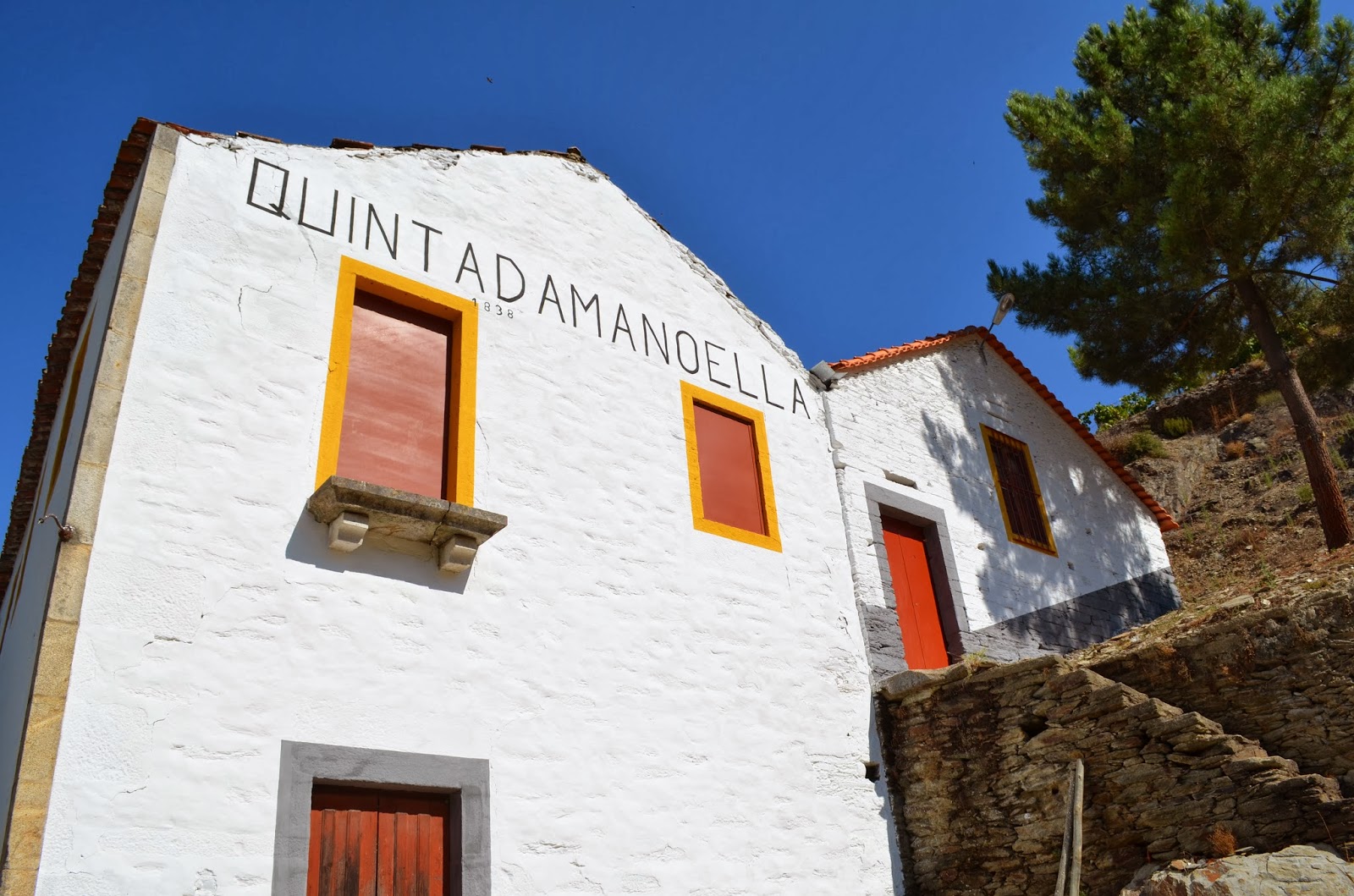
Sandra and Jorge also own Quinta da Manoella a few kilometers north of the Quinta. A much larger property at 70 hectares, Sandra mentioned she thinks the land making up Manoella was likely separate properties maintained by separate families over a century ago. There are hints to this theory all over the property. Many lagares were found on different sites of the property, leading one to think there were different owners as most owners only build lagares in one place on their property in their main building, not scattered all over the property. Olive trees bisect internal sections of the vineyards which is a traditional way in the Douro to mark your border with a neighboring property. Lastly, there were many different satellite Quinta-like buildings scattered about the entire property that could have passed for a main building in previous centuries. The property has been in Sandra and Jorge’s hands a few years and they are making progress each year, but a lot of work needs to be done to revive the old vines and buildings on the property. You can see the abandoned vineyards next to revived vineyards and see for yourself just how hard the work is to rebuild the schist terraces and then replant them with vines. I can see in 10 years Manoella being a magnificent estate when it’s up and running at full capacity.


The Quinta for Wine & Soul

Driving to Wine & Soul that morning I did not know it, but the Pinhao Valley is probably the most revered section of Cima Corga in the Douro Valley as many of the best properties and Port producers have vineyards there. On the way to Wine & Soul we passed the beautiful Quinta do Noval estate. We also drove by many vineyards owned by Taylor’s as seen from the signs near the top of the vineyards. When we arrived at Wine & Soul, Sandra was there to greet us and asked if we wanted to see the vineyards first to which we said absolutely. A tall and graceful woman, Sandra was in her past a volleyball player and a model. However it was her upbringing on a farm outside of Lisbon that inspired her to take up winemaking. You can read more about Sandra here (LINK).

Schict rock, just one of the examples of the type of top soil you see in the Douro vineyards: rocks
Pintas vineyard with schist rock scattered amongst the 30+ mixed grape varieties planted here. 
Sandra discussing the Pintas vineyard, its soil, geology and why there are 30+ mixed grape varietals planted there. 
Pinhao Valley from the top of the Pintas vineyard, a favorite photo of mine.
Pintas vineyard terracing.
We headed out to the Pintas vineyard which was a few minutes’ drive north of the Quinta. We hopped out of Sandra’s SUV and almost immediately your feet were embedded in thick fine dust that was easily an inch or more deep as we approached the vineyard from the top. The fine dust seemed to be decomposed schist as that is basically what every vineyard is planted in and what every terrace is made from in the Douro. As we made our way further down into the vineyard, the dust disappeared quickly as it seemed to collect there in the upper entrance of the vineyard. As we got down into terrace 2 and 3 there was no dust, but hard igneous schist and broken pieces of schist. There was little to no soil, this was it. I asked Sandra where the soil was and she said this is how it is in the Douro. This being the first vineyard we could walk through in the Douro, it was an eye-opener. These vines struggle to find water in the schist rock the vines live in, so the old vines thrive in a viticultural way producing few bunches of super complex fruit. By “thrive viticulturally”, I mean the vines are very stressed and actually do not thrive as they do not produce a lot of fruit. However, the fruit that is produced is very complex as that little bit of fruit gets all of the energy of the vine. In many parts of the world, this process is manipulated by hand cutting off bunches of grapes in what is called a “green harvest” which removes grape bunches from vines to manually drive more energy into fewer grape bunches. In the Douro the vines are actually stressed like crazy reaching 30-40 meters (100 feet!) into the solid rock to find pockets where rain water settles. Imagine planting a grape vine in a 100 foot deep block of fractured and splintered concrete because that is what it is like, crazy!

I learned some very important facts about diversity and age from my discussion with Sandra about the Pintas vineyard (and many other Douro vineyards). The grape varieties are 30+ different indigenous Portuguese grape varieties. The reason why they are all different is the farmers that originally planted these vines wanted to be sure they could get fruit in every vintage as some vines in their youth were less resistant to extremes and disease than others so by having many different varieties that have different resistances, the diversity allowed the farmers to harvest fruit at least every year. If you only planted 1 vine that was not resistant to extreme heat, if there were heat waves that vintage the entire crop could be lost and be disastrous for a farmers well being. With proper care and attention, these old vines grew older and even further resistant to weather extremes and disease. They are not invincible, but are much stronger when they are older as they have built up resistances to extreme conditions.


The sun shining over Manoella and its grand terraces.
mortório , or ghost vineyard, where terracing remains but the vines are long gone and in some cases being readied for replanting.
"this is how it is in the Douro" the typical cross section of the schist rock vines are planted in the Douro Valley.
Quinta da Manoella in the midst of an upgrade for use as a wine making facility.
Manoella vineyards
Sandra schooling us on the old vines at Manoella that range in age from 100 to 120 years old. 
One of the small buildings scattered about Manoella
We got back in Sandra's SUV and drove a few more kilometers north to Manoella and started at the top of the property and made our way by SUV down into the heart of the property. As we switch-backed our way down steep and rocky roads, we stopped on the way by an old vine mixed varietal vineyard similar to Pintas. 30+ varieties are planted in this vineyard with the oldest vines being 100-120 years old. Still, they produce spectacular fruit as witnessed in the old vine bottling of Manoella. As we spoke, I was tapping into that passion that drives great winemakers like Sandra. Every great winemaker no matter where they are from has this passion. Our hands were flying in the air as we talked about the property, viticultural and winemaking practices, places where we have visited in the world where great wine is made, and what kinds of wines we drink. We hopped back in the SUV and headed to what will be a functioning Quinta soon after it is renovated so it can house wine production.  Sandra also mentioned how she wants to upgrade some of the other buildings on the property to host visitors to the Douro which I think is a fantastic idea and hope is realized by the time we make our way back.

I cannot recommend a visit to Wine & Soul more if you make it to the Douro or come across their wines in your wine shop. If you are so inspired, you can even find the wines here in the US on wine-searcher.com and have them shipped to your home as they are not easy to find, but fairly readily available in large markets like New York.


A Taransaud French oak barrel aging Pintas wine. 
Steel fermentation tanks 
Sandra discussing one of the wines, Lisa listening intently, me taking notes on my iPhone.
A better view of Wine & Soul's Quinta, with beautiful Pinhao Valley in the background.
We made our way back to the Wine & Soul Quinta and tasted through the range of wines Sandra had ready for us to taste. First she walked us through the two small sections of their Quinta where they had a lagare, fermentation tanks and a barrel room where we tasted the wines. Every one of the red wines is crushed by foot treading in the lagare tanks, a traditional method in Portugal for treatment of the best fruit from the vineyards. This was one of the most thorough tastings of the visit and very enjoyable as the wines were all excellent, complex and delicious. During the trip I kept wondering to myself why more people do not drink Douro wines and it all started here while tasting the Wine & Soul and Manoella wines.


2012 Guru Branco; 2011 Pintas Character red; 2011 Pintas red (flagship); 2011 Manoella & 2011 Manoella VV
2012 Guru White Douro Blend (Branco)
Bright and fresh, limes, lemons, apple and pear fruit emerge from a medium to full-bodied white that shows good oak integration and the mild treatment used to vinify this wine. One of my favorite whites the entire trip, the Guru is a world class white wine; the 2011 I had over a dinner one night reminded me of a good village or 1er Cru Meursault. Old vine field blend white wine; 5,000 bottles production; barrel fermentation takes place in 100% French oak ranging from neutral used barrels to light toast new French oak.

2011 Manoella Douro Red (Tinto)
Black licorice, blackberry, tobacco and spice, fine and ripe tannins, full bodied with an ample finish; Aged for 16 months in used barrels; a blend of 60% Touriga Nacional, 25% Touriga Franca, 10% Tinta Roriz and 5% Tinta Fracisca; fruit hails from the young vines 35 years in age; 10,000 bottles in annual production.


2011 Pintas Character Douro Red
Elegant but well structured with purple flowers, red cherry, black currant, blueberries, and spice; nice length and good tannic structure. This is no slouch and a baby so let this one decant for 2 hours. 30% of the wine is raised for 18 months in new French oak, the remaining goes into neutral oak for the same time. From 70 year old vines, this is one of the better second wines in the Douro.

2011 Pintas Douro Red (Tinto)
Super young and tight, the nose and palate reveal blueberry, blackberry, violets, crème d’cassis, and some subtle spice, a firm and profound structure with a round palate texture, acidity gives this good freshness and focus, great length on the long finish. If you love Bordeaux or great Rioja this needs to be in your collection immediately. This is the flagship wine made from the best grapes of the 70-80 year old vines of the Pintas vineyard. Pintas is approximately 5,000 bottles of annual production. 40% new French oak for 20 months, 60% in neutral oak for 20 months. This easily has 20+ years of aging potential.

2012 Pintas Douro Red (Tinto) – Barrel Sample
A purple-red robe this is fairly developed for 11 months of age. Black and purple notes dominate with a nice perfume of purple flowers and red and black fruits. The tannic structure at this time hints at having sweeter and finer tannins than the 2011 that has the structure of a skyscraper. It finishes pure and long, with good fruit, acids and tannin.


2011 Manoella VV Douro Red (Vinhas Velhas aka Old Vines)
A field blend of more than 20 indigenous grape varieties, the Manoella VV shows good terroir as this has an elegance and transparency facet coupled with good depth and concentration; 50% new oak for 20 months is well integrated as this wine soaks it up well; red and black fruits, leather, earth, spice and minerality. There is approximately 3,000 bottles in annual production and this wine hails from the first old vineyard we saw at Manoella.

2012 Manoella VV Douro Red – Barrel Sample
The youthful barrel sample of 2012 Manoella VV was also showing nicely for it youth. Earthy, with dried fruits, a dustiness persisted in the palate from the tannins, again there was this very transparency in the wine, showing well for the 2012 vintage which was not as successful as 2011.

2011 Pintas Vintage Port
Roasted herbal notes, minty even with black kirsch and anise spice, a very complex and layered vintage port (VP), Black and dark red fruits add to the spice and fan out over the palate with a striking texture that is more wine-like than Port. A long, silky, fruit and herb infused finish echoes for minutes on the palate. One of the best and most unique VPs for 2011 that I have tasted to date.

NV Wine & Soul 10 Year Tawny Port
A well balanced and texturally smooth 10 year tawny showing orange peel, creme caramel, spice and creme brulee; Medium bodied, this finishes really smooth and balanced for a 10 year tawny, I would guess at least a 20 year tawny blind.


A bientot,
Tom


My Favorites