Showing posts with label ML Private tours. Show all posts

Friday, December 27, 2013


Alves de Sousa

An Afternoon in the Northern Baixo Corgo 

Douro Valley

Portugal

The view from the Abandonado vineyard high above Santa Marta de Panaguião in the northern section of Baixo Corgo

On our last full day in the Douro Valley we started the afternoon with lunch in Regua at Michelin rated Castas & Pratos, an old train station converted to a wine bar and restaurant. I was finally able to order a bottle of the Niepoort Redoma from 2009 and it was all that I was expecting it to be, but the food was the real star of the meal. We split an appetizer of Iberico ham with truffles that would crush any prosciutto and a decadent fois gras and egg. My entrée was a fantastic goat braised in port wine with mushrooms and Lisa had a fantastic duck breast and pear dish. We got back in the car with some sparkling water, my lifeline I drink while on any wine tasting excursion, and headed north from Regua through ever more winding Douro Valley roads to our next stop Quinta da Gaivosa in Santa Marta de Panaguiãos.

Lisa in front of the original structure at Quinta de Gaivosa
Quinta da Gaivosa is the home of the Alves de Sousa family wine and port operation. There are other vineyards in the Alves de Sousa holdings, however they are spread out in other parts of the Douro Valley. We met Tiago, son of Domingos Alves de Sousa, upon our arrival and he asked if we wanted to see the vineyards to which we of course responded with an excited absolutely. One of the keys to understanding a wine besides tasting it in different vintages is to also see the land the grapes are cultivated from, its terroir. We hopped in the SUV and made our way up the steep graded and heavily pocked road to the middle of the hillside vineyards, passing eucalyptus trees that will come into play later in the tasting of one of the wines near that thatch of trees. From this focal point we could see all of the vineyard plots at Gaivosa ranging in age from 15 years to 100 years old. 

Looking North to the summit of the Alves de Sousa property from Abandonado
These beautiful bunches are destined for a bottle of 2013 Abandonado
A beautiful old vine in the Abandonado vineyard of Alves de Sousa (early September 2013)

We continued our trek to the top of the hillside and made our way to a ridge just below the summit. We stopped at the famed Abandonado vineyard and her 80 year old vines that barely grow in this harsh environment. Because of the constant winds, stark sun and poor soil (solid granite) the vines are in a constant state of stress as there is little to no ability to retain any rain water. If the vine roots cannot continue their search deeper in the granite to find any moisture, the plant will suffer and not grow, even possibly die. The vineyard was purchased from a neighbor with the hopes of replanting the dead vines, but they would not survive, so they left the vineyard as is and tended to it just enough to make sure the old vines already there were able to produce fruit. And produce fruit they did. The first vintage was so spectacular they decided to bottle is separately. The view from the top of the Abandonado vineyard is spectacular and one of the best sights in all of the Douro Valley.

German style vertical planting of vines at the peak of the Alves de Sousa property

We moved on to the summit where some of the youngest vines are planted in a style called German because of the vertical north to south direction of the vine rows, instead of the normal horizontal rows that dominate the terraced vineyards of the Douro. This style of course was pioneered by German viticulturalists.  We peeled off from there to head back to the Quinta a few hundred feet below and came upon one of the best cross-sections of a typical Douro soil composition I had seen so far. You could see the different layers of granite, soil and occasionally vine roots jutting out randomly along the wall.


"the best cross-sections of a typical Douro soil composition I had seen" - yup, that is solid rock

Vinha de Lordelo Tinto amphitheater shaped vineyard, 100+ year old vines
We continued lower to a vineyard that is shaped like an amphitheater that protects the 100+ year old vines from the harsher parts of the Gaivosa terroir. Nestled just below the middle of the mountainside and centered in the middle of the vineyard matrix, the vineyard has a nice south/southwest exposure that allows the vines to catch a good portion of the sun without the strong winds.  You can taste his in the wine as it is a very generous, warmer style with solid tannic structure.  After this thorough vineyard schooling we were ready to go to tasting class and see how the vineyard affects the character of the wines.  At Alves de Sousa we had one of the longest tasting sessions and one of the best vineyard tours, if you can score an appointment it is definitely worth a stop.  My latest search on wine-searcher.com showed that Abadonado is available in limited amounts, the Port and the regular Quinta bottlings are also available.  But my biggest regret is not bringing back some Vinha de Lordelo Tinto as that is not available.

Below are the tasting notes of the extensive tasting we had of these good to exceptional wines.

The sweet spot of the Alves de Sousa dry table wine portfolio


Reserva Branco 2005
This white initially goes trough a 48 hours cold soak on the grape skins. The skins are then pressed and the wine is pumped over in tank for a few hours. After initial fermentation the wine then goes for 1 year in 100% new French oak.  The color is a golden honey as it is meant to be similar to an “orange” wine. Mature aromas mix with juicy golden fruits, and some wood that is well integrated at this point being 8 years old. Nicely balanced with good acidity this clocks in at only 12.5% abv and is made in minuscule amounts (1,500 bottles). The wine is purposefully held back 6-7 years for release from the vintage year so the wine can integrate properly and be drank at the proper time the winemaker intended.

2010 Vale da Raposa Sousao

Sousa is a red fleshed grape and this wine has an extra dark color without tasting or feeling like it is over-extracted. The red flesh permits darker color with less skin soak and this is helpful for tannin extraction of the grape skin as this wine does tend to be a fairly tannic wine. Countering the tannins is also a solid core of acidity, which reminded me of some wines from Italy, such as the Etna wines from the volcanic Italian island of Sicily. Darker sure, but similar fresh acidity and firm tannins. Rustic and fleshy indeed, the nose and palate showed tobacco, tar, violets, and flowers. The tannins are rugged, but ripe; the acidity is amazing as it lends ample freshness. Another wine of small production at 2,000 bottles.

2008 Quinta da Gaivosa

From 80 year old vines and 20 different grape varietals the namesake wine of the Quinta reveals black cherry, pain grille, and a touch of roasted herbs with a beautifully elegant and wide beam of bright and fresh fruit. Great complexity and depth, solid freshness and length, fine to medium tannins, this is a beautiful and elegant wine that will age 15-30 years. It spends 15 months in oak barrels, 50% new/50% old French.

2009 
Vinha de Lordelo Tinto
From 100 year old vines and 30 different grape varietals this vineyard sits in a natural amphitheater. Limited in production, these vines average 1 bunch of grapes per vine. The nose and palate show black plum, juicy black cherry, and chocolate. Fleshy and dense on the palate, this wine carries the most concentration of the 4 major De Sousa table red wines. Very polished and sexy, the tannins are ripe and provide a nice backbone of structure.

2010 Abandonado

From 100 year old vines and an unknown amount of mixed grape varietals, this is also a small production wine of only 3,000 bottles. Meaty with eucalyptus, tar, and floral notes, the Abandonado has a crazy complex nose and palate. Great freshness, ripe red, blue and black fruits mesh well with medium+ tannins. This spends 18 months in mostly new French oak barrels and s small amount of Portuguese oak.

10 Year White Port (Tawny like)

Made from multiple vintages similar to how a Tawny Port is made, this was one of the better white Ports we had the entire trip, but overall I am still not convinced of the viability of White Port as a stand a lone beverage.

20 Year Tawny Port

Fantastic, the best 20 year Tawny I had encountered the entire trip, but it was not yet ready for sale as it was not yet approved by the powers that approve new Port wines and regulate the Port wine industry as a whole. Candied orange peel, caramel, crème brulee with a sharp cut of acid this is great stuff. Like many of the newer producers, they bottle this in the hand grenade like bottles that are short and stout.


A bientot,

Tom


Friday, October 25, 2013

Quinta do Crasto


Quinta do Crasto

Douro Valley, Cima Corgo
September 2nd and 3rd, 2013

Quinta do Crasto estate hilltop
Nestled in the heart of the Douro Valley, Quinta do Crasto sits high on the crest of a hilltop with beautiful terroir that overlooks the Douro River a few miles west of Pinhao in Cima Corgo. "Crasto" is one of the most admired and respected Quinta in all of the Douro Valley, led by the Roquette family that is one of the most respected wine families in Portugal. While out dining, I saw more bottles of Quinta do Crasto wines than any other single brand on the tables of the local Portuguese. The value that Crasto wines deliver is spectacular across the entire range of wines. Wine is produced at all price levels from the basic Flor white or red that cost about $9, all the way up to the rare and spectacular Maria Teresa at $100+. The range of styles leans more to a traditional style of winemaking. For me the essence of the estate and the Douro comes through most in the expression of the “Old Vine Reserva” which is made from 30 different grape varieties from estate vines that are 70+ years old. Priced fairly at about $35, this is a go to wine for anyone looking to explore Portuguese table wines at the premium level.


The sun setting behind the hills that make up the Quinta do Crasto estate.
We originally planned to spend one afternoon at Crasto for a tour and tasting, but ended up being guests the following day for some swimming in a stunning infinity pool and dinner with a selection of older and rare wines from the Crasto cellars. As we made our way through the tight and winding roads through the north west side of the Douro from Pinhao on our way to Crasto, the stunning views of the Douro countryside were intoxicating. As far as the eyes could see, there were hillsides rising up from the river banks. Many of these hillsides were covered top to bottom with the schist terrace vineyards, many built hundreds of years ago by hand. Where there were no vines or terraces, there was the brush scrub indigenous to the region, olive tree groves or terraces that were abandoned years ago around the time of phylloxera and never brought back into working condition. These ghost vineyards are called mortórios that still have the terraces that define them, but are crumbling and overtaken by the indigenous brush scrub. In some places the mortórios are being replanted and brought back to life, but some are so far gone that it is not economically feasible to bring them back to life.

Check out that view over the Douro River
As we arrived at Crasto, we took in the stunning views of the vineyards and the Douro River below. Driving up to the estate we saw in full view the renowned Maria Teresa estate vineyard that produces what is to me the best wine produced by Crasto. When we arrived we met Andrea, head of hospitality at Crasto, who was one of our favorite people we met during our trip to Portugal. Disarmingly friendly, funny and a great host, Andrea seemed like a long lost sister that was taking care of her family while we were under her care. She showed us around the estate and that was where we came across the most magnificent infinity pool I have ever seen. There was a beautiful patio that was just off the back of the home with a long communal table that seemed to be the perfect setting for leisurely dinners and lunches with guests, friends, and family.

Andrea, our amazing host at Crasto and Miguel our steadfast guide.
 We made our way inside to the dining room to get started with the wine tasting. We tasted our way through a good portion of the Douro 2012 white wine, 2011 Crasto Superior, the 2010 and 2004 Old Vine Reserva, and the epic 2007 Maria Teresa which is made from 100 year old estate vines. As is tradition in the Douro, we finished the tasting with a port, the 2008 LBV to be exact.


The Maria Theresa vineyard just below the estate buildings at Quinta do Crasto
We were having a great time during our tasting, learning about the different vineyards Crasto owns, production methods, and the history about the Roquette family and the Crasto property. Andrea was asking how we liked our trip so far and where we had been eating lunch and dinners. Andrea asked me what our dinner plans were the next day. Miguel mentioned we were going to the CS Vintage House and Andrea hinted that may not be the best choice for us. So since we were at the Crasto dining room table as a joke I said, “well, we could always just come here instead”. Without flinching Andrea opened up her calendar book and lucky enough for us the schedule was clear the following evening and she said that would be fine. I said to Andrea “You know I was kidding, right?” Well, she was not kidding.  Andrea told us she would double check with the staff to be sure the schedule was fully clear and if so to come back the next day to swim in the infinity pool and enjoy a meal at the table out back with some of the great Crasto wines. Thankfully that was the case and by the next morning we had confirmed our evening plans with Andrea.


Tasting grapes in the vineyard.
After the tasting we took a glass with us and headed into the vineyards. We got into the soil and terraces and since the fruit was so far advanced, we were able to taste a few of the different grape varieties. It was amazing to taste the same grape variety from different vineyards and have them taste so differently. Conveniently the sun was setting and we got some great photos of us in the vineyards. Funny enough we had our own paparazzi with Andre and Miguel manning the cameras. The last time we had this kind of camera attention was our wedding.


Barriques in the lagares and stacked off to the side.
 

Fermentation and blending tanks.

Fermentation tanks

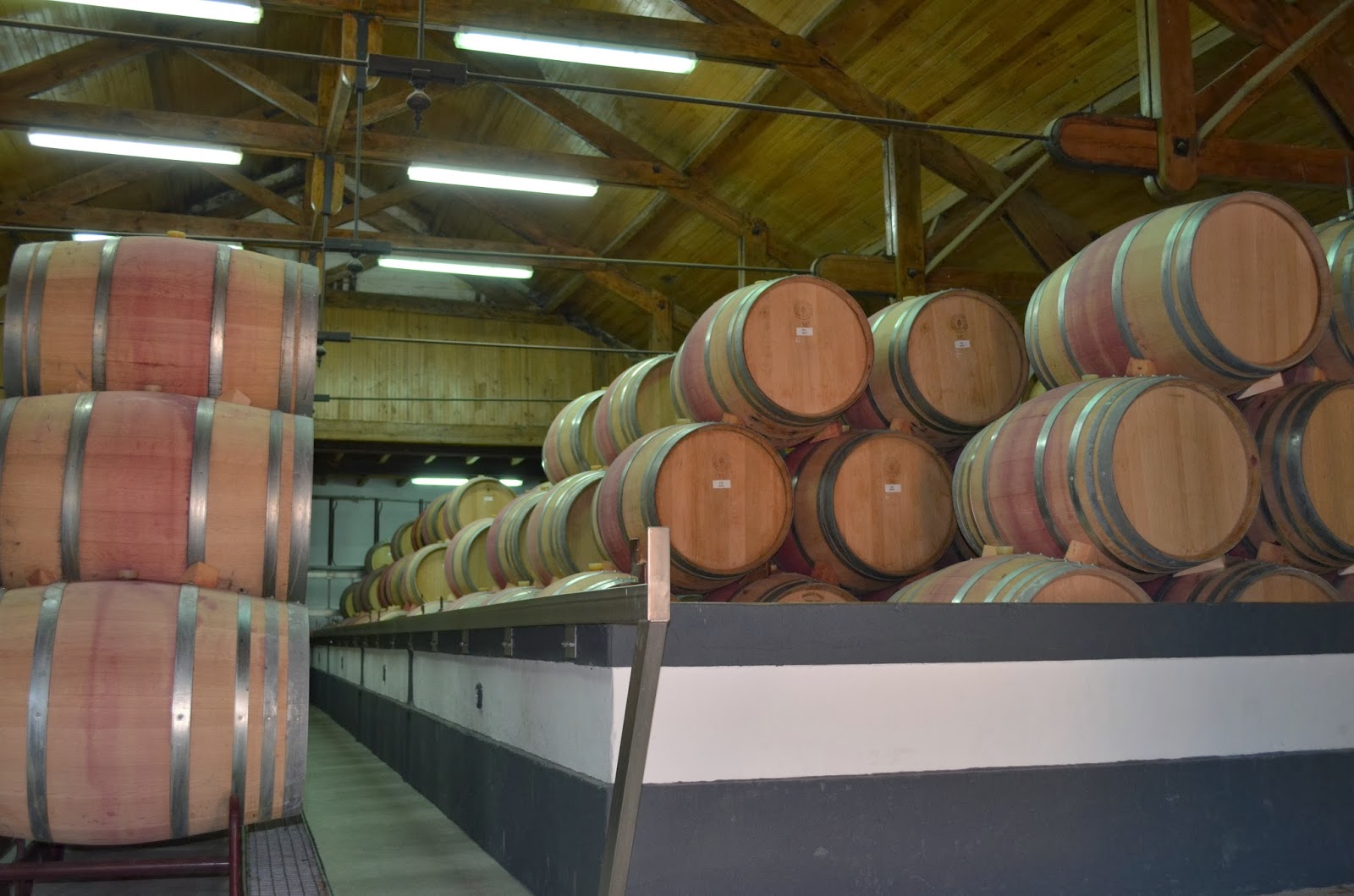
The new barrel room, all walls, columns and stacking structures are black.

Racking barrels in the new barrel room.

We soon made our way to a tour of the wine making facilities, walking through the multiple fermentation rooms, barrel rooms and bottle storage locations. We also stepped into the onsite lab where they were currently testing grapes to check sugar levels and ripeness to better time the looming harvest. The week after we left the harvest commenced. The same lab also identified the 30+ varietal plantings within the vineyards that produce the old vine and the Maria Teresa wines. We finished up the tour and drew the day at Crasto to a close. As we left we felt so lucky and privileged to have had such a great experience and were looking forward to coming back the next day for dinner.


The estate home at Quinta do Crasto.

As we were making our way to our first appointment Miguel got the call from Andrea that we were good to go for dinner that evening at Crasto. The day was set and now ready to unfold perfectly. After our Quinta appointments that day, we got to Crasto around 6pm, just in time to see the sun set and for a quick dip in the pool. Our new best friend Andrea greeted us with a warm smile and made us feel right at home. We quickly changed into our swim suits and made our way to the most amazing of infinity pools I have ever seen. The pool was fresh water and had a refreshing chill to it to enliven the senses. I really think it made the delightful bottle of the Crasto white that Andreas opened taste even better. Refreshing and clean, the Crasto Branco had excellent citrus fruit notes, minerality with excellent acidity and freshness. As we sat pool side and sipped the wine, Andrea brought out a spectacular platter of appetizers that we happily devoured. We nibbled on Roasted Marcona almonds from trees planted around the estate property, some local cheese, as well as estate olives, crusty bread and a slew of mixed bites. If we were not careful we would fill up before we made it to dinner. Once the sun started to make its way down, it cooled off so we made our way back inside freshen up for dinner.


The amazing infinity pool.

Fresh ingredients for dinner that evening.

The family style dinner table,


As we sat down to the dinner table our minds moved to an even further relaxed state, sharing stories of our day and from our lives back in the US with our new friends in Portugal. The light was perfect, as the sun set and gave way to the night, a mellow gold pink and orange sky turned to dark blue, purple and then black as night finally arrived.


As the courses of food started to make their way out, Andrea had generously opened some fantastic wines for us to have with dinner. I did not take any tasting notes but from memory I will do my best to get across how spectacular they were. The 2011 vintage port was rock solid. A stout mass of cherry, blueberry and brambly blackberry mixed with crushed rock and a slight grilled herb note that was just barely hinting at the amazing future this port has ahead of it. A rare wine to find here in the US, if you see any get a bottle it as it will be a special treat, especially the 2011. Next up was our second stab at the Crasto Superior. An excellent value, the Crasto Superior shows the rugged beauty of the Douro Superior region in a glass. Full bodied with wild fruit notes, the tannins were more than happy to ratchet up the complexity and structure of this bold red wine.


My favorite of the tasting was also one of my favorite wines we had the entire trip, a single varietal Touriga Nacional bottling from 2005 that was absolutely spectacular. Some bottle age, exuberant fruit, good structure from the ripe and silky tannins and some lively acidity lent this wine a regalness not seen often by those outside of Portugal. It’s hard enough to find the current vintage of this wine, never mind one 8 years old.  However it is well worth the time and money to seek out a few bottles.

The last of the bottle for the evening was the Quinta do Crasto 'Xisto' Roquette e Cazes. This is a wine made by with participation by the Bordeaux winemaker for Chateau Lynch-Bages, thus the family name Cazes. Roquette of course is the family that owns Quinta do Crasto. The influence of Bordeaux is definitely apparent with new, but subtle toasty oak notes, red and blue fruits, with supple medium grain tannins and ample acidity.


As we finished off the dessert, we started to top off the last glasses of wine for the evening and head home to conclude an unforgettable evening. We picked up a few bottles from Crasto to take home and Miguel drove us back to Vallado to retire for the evening. On the way back we had a nice drive, unleashing a chorus of sing-along with Journey’s ‘Don’t Stop Beleivin’. Flashes of The Sopranos, my college days and The Douro Valley were flipping through my head, what a great end to an incredible day. We will be back to the Douro Valley and when we do we will make sure to visit Crasto again. If you find yourself headed to the Douro I cannot recommend more a stop at Crasto, who knows maybe if you make an impression you may be able to stay for dinner. Andrea and the staff at Quinta do Crasto made us feel at home, like we were hanging out with family around the dinner table. What more can you ask for?

Below are the tasting notes for the wines we tasted during our first visit to Crasto.

2012 Douro Branco
Made from traditional Douro white grape varieties Gouveio, Roupeiro and Rabigato, this wine was pale straw in color; waxy lemon notes, flowers and a touch of honey in the nose. The palate is fresh, clean, stony and chalky, with bright citrus lemons.


Crasto Superior 2011
Made from Touriga Nacional, Touriga Franca, Tinta Roriz, and Sousao, this wine has a very dark core. The Sousao grape is a red fleshed grape that contributes to that additional depth of color. It spends 1 year in 2nd use French oak barrels. Blackberry, black cherry, licorice, Asian spices, and meaty notes rise from the glass. Fresh and clean, there is good depth, medium+ tannin, with a long and persistent finish for the class this wine lives in.

2010 Riserva Old Vines
The Riserva was open for 2.5 hours when we tasted it. Crafted from vines averaging 70 years this is a classy and elegant wine; beautiful, with great persistency and balance. This is an outstanding wine of aristocratic nobility. Impeccably balanced, fresh and long in the finish. Black cherry, creme d'cassis, and subtle oak notes meld well in the palate. The flavors stretch on for what seems a very long time. The Riserva will age nicely in bottle for 10-15 years depending on the vintage.


2004 Riserva Old Vines
A red core with lighter red edges, this wine was in a real sweet spot for drinking. Mature notes of dry red fruits, haunting forest floor, cigar wrapper, cedar, and a mild oak influence, it was so open and broad, complex, yet finely elegant. Good depth, persistency and excellent oak integration. This is a world class wine, refined. So easy to enjoy and savor, the flavors unfold in layers over the palate.


2007 Vinha Maria Theresa
From the oldest vines on the estate averaging 98 years old, the fruit from these vines is minimal, yet excellent in quality. The wine is not made every year, but only in excellent years when the character of the vineyard rises to levels above the rest of the estate old vines. The name Maria Theresa came from the daughter of the prior family that owned Crasto. 1998 was the first vintage and has only been made in 6 vintages since then. The 2007 was aged in 15% American oak barrels and the rest in new French oak barrels. The 2009 was aged in 100% new French oak barrels for 20 months. A dark ruby core, with vibrant red edges. Coaxing the nose brings out 
black and blue berries, cherry, charcoal, licorice, and earth tone aromas. You can barely notice the oak but for a hint of creaminess and roundness on the palate. This was really big on the palate with tons of complexity. It sailed on to a fine and elegant finish that was long and clean.


2008 LBV
This was newly bottled 1 week prior to our tasting but one would never know it from what we tasted. Violets and purple flowers, pepper and spice, savory herbal notes. Fresh and powerful, this attacks the palate with intensity and opens nicely across the palate, giving way to a long palate staining port experience. A huge bargain, this is one to seek out for more frequent consumption.


A bientot!

-Tom


Friday, October 11, 2013

Taylor, Fladgate & Yeatman


Taylor, Fladgate & Yeatman


Porto, Portugal

August 31, 2013


LBV tank at Taylor's Port Lodge.

Taylor Fladgate Yeatman, more commonly known as “Taylor Fladgate” or “Taylor’s” has a long and storied history of being one of the premier Port shippers. Today Taylor’s is respected by their peers and admired the world round as one of the greatest producers of fine ports in many different styles and varieties. Located in Portugal near the coastal town of Porto, Taylor’s is actually located across the mighty Douro River from Porto in Villanova de Gaia. In fact Villa Nova de Gaia is home to the “Lodges" of all the great Port shippers. The Port Lodges sit clustered amongst each other in Villanova de Gaia on the hillside rising up from the south side of the Douro River bank, seemingly overlapping each other since they sit so close together.
If you are not familiar with Port you may be thinking what exactly is a Port shipper and what is a Port Lodge. The term Port shipper is derived from the fact that companies like Taylor’s originally, and for decades after their inception hundreds of years ago, mostly only received finished wine, fortified the wine with Brandy, aged the fortified wine in “pipes” (large wood casks), bottled it and then shipped the finished Port wines off to the United Kingdom. The base of a Port shippers operations where they received the wine, processed, blended and aged it into fine Port wine is called a Port Lodge. The Port shippers were almost exclusively founded by persons from the UK and is part of the story of how Port wine was discovered, or rather invented (more on that later). This British connection is also why the majority of the Port shippers have Anglo names in a country where the indigenous last names sound nothing like an Englishman’s surname. 

Boat used to carry wine from the Douro Valley to Porto destined to become Port.  Note the huge rudder off the back on the right.


Since Port shippers had a much different role then a winery for the first century or so of their existence, it is hard to call them a winery or anything similar to a chateau. In many ways the inner workings of a Port shipper are very different and quite diverse compared to your typical winery, and in some ways they are very similar, especially in the modern era of Port production. Up until the most recent decades almost all Port shippers did not tend vineyards or harvest and process grapes into wine. Taylor’s was a rare exception in that they did own vineyard property in the Douro Valley buying their first property in the mid 1700’s. They would receive the vinified wine at their Lodges down river from the Douro Valley via boat in huge casks that held the pre-fortified wines and were then aged in the pipes in the Port Lodges.

Part of the huge Quinta de Terra Feita estate vineyard north of Pinhao along the Pinhao tributary river that flows into the Douro River

Nowadays it’s a different story. Almost all Port shippers exclusively own multiples of vineyards and Quinta where they tend vineyards, harvest and then process grapes into wine to use in the Port production process. Quinta is a term that most closely relates to a winery or Chateau in the Douro Valley. The Quinta can represent the entire estate with multiple vineyards or the main building or structure at a vineyard site in the Douro Valley.

So, how did Port wine come about? Well, based on a few different books and stories from people in the Port business, the English discovered Port wine while trying to find a replacement for the French wines they could not purchase when at war with said country. Now, if you remember your history classes even a little bit, the English and French fought like cats and dogs most of the 11th through the early 19th centuries. Heck one of the wars lasted 100 years and is named just that. If the war was not so bad, there was only a heavy tax making the wines prohibitively expensive. If the war was bad, you simply could not get casks of wine imported. So some resourceful chaps with a nose for discovery went in search of new sources of wine and stumbled upon Portugal, more specifically the Douro Valley. These Port Pioneers first found wines in Porto that caught their attention but it was supposedly not to their liking but a good start. Eventually they made their way up river to the far eastern navigable reaches of the Douro River. There they had finally found the wines they were looking for. The wines were rich, fruity and full bodied. As the story goes, in order to protect these wines from the harsh rigors of a journey by sea back to England brandy was added to the wines to fortify them from spoilage.  Thus, Port was born and the sole reason why the English influence has been so strong. Reading through the history of this great Port Shipper, you get the sense of the hard work, skill, patience, fortitude and luck that it took to get the Taylor Fladgate Yeatman company to the stature of where it is today and most of the 20th century (Official History).  Since it's
 inception in 1692, Taylor's has been led by hard working men with a knack for strong leadership coupled with great vision

Yours truly in front of the entrance to Taylor's Port Lodge.

For our stay in Porto, we only had time for one Port Lodge visit so I decided that it had to be Taylor’s for its storied history and impeccable reputation as being one of the finest Port producers in all of Portugal. I really wanted to see the Vargellas vineyard in Douro Superior but there are no facilities there to host guests to taste through the range of Port wines they offer. We also decided to stay at the Yeatman hotel across the street from the Taylor Port Lodge for our lone evening in Porto.  The Yeatman was by far one of the nicest hotels we have ever stayed at in all of our travels around the world. Each room is named after a sponsoring Portuguese wine producer; ours was room #301 Comenda Grande from the Alentejo region. The elevators are lacquered with panoramic scenery from the Douro and inside the dark cellars of the Taylor's Port Lodge. The hallways are finely appointed with original works of art from different times in the history of the city of Porto, with each floor having a different time period of art. The Yeatman exudes excellent service, with enormous beautifully appointed rooms, an amazing view and balcony for every room, an even more amazing decanter shaped infinity pool, and the crown jewel the delectable Michelin starred restaurant. 

The lower entrance gates to The Yeatman Hotel, this is NOT where guests arrive.


Speaking of the restaurant at the Yeatman, we had one of our best meals of the entire trip that night. It was hard to beat, the top notch service for both the cuisine and especially the wine. Our Sommelier that night was Helmer and he introduced us to many of the different wine regions of Portugal. We chose the wine pairing and he asked us for our input so he could tailor our wines to match our palates and the level of discovery we wanted to embark on with the cuisine. The restaurant at the Yeatman has an incredible 1,200 selections (all Portuguese wines) in their wine cellar for diners to choose from and 82 of them are available by the glass. This allows for the Sommelier team to match the diners preferences to the wines paired with the cuisine, adventurous or not. This was by far the best wine pairing we had ever encountered for a meal, ever. I tend to be skeptical of wine pairings in general as many are small pours from wines specially picked to exploit as much profit from the wine pairing as possible. This was not the case as Helmer brilliantly contrasted a Lisboan Pinot Noir (blind I would swear it was from Oregon or the Sonoma Coast) with a Douro red blend that was elegant and leaned more to a Burgundian sensibility as it showed the earthy and mineral inspiration of a red Burgundy. Bravo to the Yeatman’s Wine Director Beatriz Machado for a talented staff and an adventurous wine program that thrills the senses and simultaneously educates the diner about the many great wines of Portugal. That evening at dinner I knew few Portuguese wine producers by name, minus a few of the larger names and those highly praised by critics.  I only knew a tiny fraction of the 82 wines on the list. On the flight home I went back through the wine list I took with me and recognized many, many more of the wines. 


Our fantastic Sommelier Helmer gave us a peak at the kitchen the evening we dined at The Yeatman

Large vats holding vintage Port at Taylor's.

The tour of Taylor's Port Lodge started with a tasting of the Chip Dry White Port, a simple and easy going fortified white wine.  White Port these days is being diversified into the cocktail set in Portugal as a mixer. The Connoisseur tasting was almost every wine they produce, plus I had asked for the 2011 Vintage Port (VP) Port to try and they came through and had it available. But first was the walking tour of the facilities which was in a large group of about 20 persons. The tour guide was great and managed the big group to make you feel like you were the only people on the tour, giving us a ton of factual information about the history, processes and products of Taylor’s. 

Port pipes holding wine destined for Tawny ports.

Initially we came upon huge vats containing a vast array of port wines ageing to perfection. Then later we walked down a long corridor lined with the pipes that contained wines dating back to the late 1800s. At the end of the corridor was a huge wooden tank, probably the largest I have ever seen. This was the LBV tank where the Late Bottled Vintage (LBV) port aged before it was bottled, destined for earlier consumption of a VP by the consumer. Taylor’s invented LBV and now every major Port house produces an LBV. At about $16-20 it is one of the best deals one can get for a VP ready to drink as it hits the shelf. We saw some stock of old bottles aging quietly and a few more tanks, but the tour came to an end and the real fun started with the tasting of the port wines.

A very old wood tank, not sure if this was for blending or fermentation, it may not even be used anymore.


The following was a private tasting conducted in the tasting room at Taylor's. The Tawnies were great, especially the 20 and the 40 year old. The 2008 LBV port is a must buy, 2007 is the LBV in the market right now in the US but I will be keeping an eye out for the 2008 and will purchase this when it is released here in the USA. Of the VPs, I liked 2009 right now, was fascinated with 2011 though it is too young to enjoy its full potential.  But the 2011 will be a special VP once it comes into its own. The Vargellas 2008 VP was great, a much different style that was more voluptuous and flamboyant than the classic VP. Below are my tasting notes:

2008 Late Bottle Vintage Port
The LBV is an easy drinking, jovial, and full of character, classic everyday ruby port. Not expensive at around $18 this delivers a great vintage port experience for the money. Lisa had said before this trip she does NOT like Port wines. After one sip of this she said, whoa, this is really good I like this one. Black cherry, cola, subtle spice with supple and fine tannins. Ultra silky on the entry and through to the finish. Full flavored but not weighty or cloying, fresh with good length and fruit.


10 Year Tawny Port
A red-brown color with light red edges. Whiffs of your standard Tawny port where the orange, brown and golden yellow spectrum of aromas and flavors are always standard. Orange peel, caramel, and citrus spritz notes were immediate, full bodied and a bit of alcohol fug, to me not as fresh as its older siblings.


20 Year Tawny Port
An orange-red color with amber edges. Similar aromas and flavors to the 10 year Tawny but with a brighter and fresher nose, more depth in the palate, plus more mature notes from the extra years of age in barrel. There is less spice and the alcohol is better integrated, more complex orange and citrus flavors and aromas, and a little brown sugar that lead to a fresher impression. Good intensity, with an elegance to its weight, this sails to a long and fresh finish.


30 Year Tawny Port
A red-brown color with amber edges. This has the most pungent nose of the three Tawny ports. More sherry-like with saline and oxidized notes that further complicate the palate in a good way. The caramel is enhanced and plays a foil well to the orange zest, almond and creamy notes one gets in the palate and especially the nose. This palate impression is more full bodied than the 20, 30 and 40 Tawny ports. This ends with huge finish.

40 Year Tawny Port
A lighter orange-brown color with amber edges. As expected, this was the most elegant, complex and balanced of the bunch. The nose rises easily and immediately shows you the kaleidoscope of aromas that later unfold on the palate in gentle waves of complexity. Medium plus bodied with elegant but persistent layers of orange zest, caramel, maple candy, roasted nuts, and dabs of cream and brown spices that repeat gently wave after wave of flavor. Great acidity and an uber clean and long finish that sails on forever. Outstanding.


Quinta de Vargellas 2008 Vintage Port
A vintage ruby port from a single Quinta sourced from the Quinta de Vargellas vineyards in Douro Superior, the furthest east region in the Douro Valley. The color is an opaque purple and red core with red edges. Meaty and pungent plum, blackberry, sweet tobacco, vitamin, and spice notes that rise from the glass. The full bodied and extracted palate adds mocha chocolate, black raspberry, and leather notes. A medium+ finish, the freshness is less so than the others, but this wine’s difference is a nice contrast to the 2009 and 2011 traditional Taylor's VPs. Lisa’s favorite of the group.


Taylor’s Vintage Port Overview
Probably the most important port wine that Taylor’s produces, and certainly its most recognized ruby port, is the classic vintage port. With small production compared to their other bottlings, the vintage port is made only when there is an excellent vintage that is “declared” by the house as an exceptional vintage worth bottling for a single year. The sources for the vintage port wine are only from the best lots of the 3 estates Quinta de Vargellas, Quinta de Terra Feita and Quinta do Junco. Once the lots are harvested Taylors will select the best lots from the three properties and then aged them for two years in large oak vats.

Vintage Port 2009
The color is an opaque red and blue, with red edges. Immediately the nose gives the impression of a distinct wine, not so much of a sweet wine that port can be. Outstanding elegance, Bing cherry, blueberries, spice and saddle leather aromas rise from the glass. The palate has superb grip, a full bodied structure with layers of flavor. At first it was still a little tight, but with 30 minutes in the glass, the air changed the dimensions of the wine nicely, allowing the wine to blossom and open more. Firm tannins are less noticeable, but with more purposeful detection they were apparent through the fresh fruit and perfectly integrated brandy fortification. The structure echoes through the finish, framing a long, complex finish of fruit and spice. Awesome. Still a baby, I’d wait a few years. If you can’t wait decant for several hours checking in along the way.


Vintage Port 2011
My first taste of the heralded 2011 vintage ports did not disappoint. Of course different than the 2009 vintage port and not yet fully integrated, you could however get a good indication of quality from the different parts of the wine. Impeccable freshness, perfectly ripe and structure tannins, well balanced fruit and acidity were all traits in this wine. When these different parts of the wine integrate over time, what will be left is a sublime and legendary port wine. Again more wine like in the nose. Currants, licorice and graphite concentrate in the nose and flow through to a palate complex with blueberry, black cherry, licorice, and spice. Medium plus tannins are young, ripe and tight; fresh acids add lift and push the finish even further along with solid length and complexity. A legend in the making.


A Bientot!

Tom


My Favorites