Showing posts with label Kobylarz. Show all posts

Thursday, September 19, 2013

New Jersey Wine


Discovering the Outer Coastal Plain Wine Region of New Jersey

Pinot Noir grapes in a Tomasello vineyard
Not long ago before summer got into full swing, I ran across a tweet from the New York Times about how some great wines were being made in my home state of New Jersey from Bordeaux varietals.  The wines are supposedly so good that they were faring well in blind tasting competitions with classified growths from Bordeaux and Napa Valley stalwarts made from Bordeaux grape varietals.  On a few occasions wine professionals from various backgrounds participated in blind tastings of these wines with their more heralded brethren and ranked higher than many of them consistently.  After I read the article I had to see for myself what the buzz was all about.  That day finally came last month as we visited Tomasello Winery and Amalthea Cellars in the Outer Coastal Plain AVA in the southern part of New Jersey, which is about 30 miles east of Philadelphia.  The following are our experiences and tasting notes from the trip. 

So, how were the wines?  The best ones were better than anything I have had from Long Island and the Hudson Valley, sorry New York.  Tomasello's Palmaris wines were particularly excellent and were everyone's favorites of the day.  A few of the Amalthea Europa wines were very well made, but their Cabernet Franc Reserve was the group’s favorite wine from Amalthea.  The Amalthea Cabernet Franc Reserve was one of the best 100% varietal Cabernet Franc wines I have ever had from the US, not just the east coast, or New Jersey for that matter.  Overall, the Cabernet Franc wines from both wineries impressed us the most and lead us to think that the future of NJ red wines might lie in the Cabernet Franc grape.


Tomasello Winery
Atco, NJ

Our morning appointment at Tomasello started a little before 11am and only took about an hour and 30 minutes to drive to from our home in Hoboken.  We walked into the tasting room and you could smell wine and fermentation in the air, a smell I am quite find of.  Head to Napa Valley during crush and you can smell it just rolling down your window in your car driving through the valley.  On the wall, my eyes drew immediately to the old pictures from the early years of the Tomasello Winery showing the founding grandfather and father of the current proprietors Jack and Charlie Tomasello in the vineyard or in other acts of vineyard or winery maintenance.

Vintage photos of the Tomasello lineage
Jack Tomasello met us shortly after we arrived and gave us a background on the winery and the wines that they make.  Tomasello is known for its wide range of fruit and sweet desert styled wines, the production at their winery is literally almost all sweet wines.  The small portion of dry table wines they produce varies across most of the commonly found vinifera grapes of Cabernet Sauvignon, Cabernet Franc, Petit Verdot, Syrah, and Pinot Noir.  A few other grapes new to me are also grown by Tomasello; especially a charming new grape for me called Chambourcin that made a very promising wine reminiscent of a Cotes du Rhone meets a Carmenere.   
Great cab!  2010 Palmaris Outer Coastal Plain Cabernet Sauvignon Reserve
There was no wasting time in getting to the good stuff.  Jack poured us the 2010 Palmaris Cabernet Sauvignon Reserve in Riedel glasses.  Jack then proceeded to discuss the evolution of this wine and how the 2007 and 2010 vintages turned out such great fruit that they were able to make the Palmaris wines in those vintages.  New Jersey of course is not Napa and not Bordeaux, but when the weather is just right the Palmaris wines reach heights that New Jersey wines have rarely achieved.  The bottle was already open for an hour or so and as I raised the glass to my nose it was apparent immediately from the nose that this is a special wine indeed.  The nose did not lie as the palate impressed with its complexity, depth and most important of all balance. 

2010 Palmaris Outer Coastal Plain Cabernet Sauvignon Reserve
The color was a deep red with vibrant red edges.   The nose rose from the glass with a mix of red currants, cherry, roasted coffee and spice notes.  The palate was complex and fairly tight with good acidity with medium to full grain tannins that framed the long and full finish.  The flavors of cherry, currants, coffee bean and spice sailed on persistently through the finish.

Next we tried the 2010 Palmaris Cabernet Franc Reserve which was equally as impressive.  The Cabernet Sauvignon is a masculine wine, strong, complex, tightly wound but the Cabernet Franc was more feminine in that it was plush, velvety, fruit forward and silky, giving the taster more sensual textures and up front fruit.  Drinking really well now, the Cabernet Franc was open for an hour as well and accessible immediately.  Loads of fruit rose from the glass and fanned out on the palate.  The finish was expansive and filled with fruit and ripe tannin.    
The color gradation of the 2010 Palmaris Cabernet Sauvigon Reserve 
2010 Palmaris Outer Coastal Plain Cabernet Franc Reserve
A dark red core with ruby edges.   The nose was dominated by lush fruit and spice notes.  Cherry, currants, plum, and blackberry mingled with some cracked pepper and black tea notes.  The palate is lush, dominated by a clear purity of fruit.   There is a core of tannin, but the fruit at this time is definitely leaving a bigger impression.  Decent acids and medium grain tannin add a little structure and freshness to a long, fruit filled finish.

The Bordeaux varietals Tomasello vineyard
Jack then said we should go and see the vineyards.  We saddled up and headed about 2 miles west of the winery to a long, rolling vineyard site green with vibrant and healthy vines.  These were the main Bordeaux varietal vineyards.  We saw Petit Verdot up close, showing healthy bunches that will hopefully ripen perfectly given a good growing season.  Jack mentioned that the flowering and fruit set in spring is not usually a problem for his vines.  It’s the 2 months starting mid way through September and ending in mid November that matter the most.  If there is a hurricane or a lot of rain, the odds of a Palmaris vintage are very low.  This window of time must be consistent in temperatures and low in moisture as this will make the difference between a good, average or poor vintage.  As one would suspect, 2012 was a washout with Sandy and one other large tropical storm that all but ruined the vintage. 2013 so far has been pretty good, so if there are no large storms or major temperature drops 2013 might just be a good vintage. 

Jack Tomasello schooling us on viticulture.
Another threat to the vines is the local neighbors, deer, birds and other animals of course will pillage a vineyard if they are not warded off.  In all of the Tomasello vineyards they installed a sound system that emits the craziest assortment of noises to ward off mostly birds and deer.  The sounds sound like a coo-coo bird being strangled, ricocheting wild west gun shots, buzz saws, and, well you get the picture, or the sound in this case.

Barrel sampling, the device in Jack's left hand is a thief.
We got back in the cars and headed over to the barrel aging facility for the premium wine which was located at another vineyard site, more on these vines in a moment.  The barrel room was of course temperature controlled and therefore very cool.  We saw stacks of American and French oak barrels that were housing the 2011 and 2012 wines.  We tasted through a variety of unfinished wines from both vintages of Cabernet Franc, Cabernet Sauvignon and Petit Verdot.  The Petit Verdot was especially nice, reminding me of the few wineries in California that do a mono-varietal bottling of this grape that is usually a small blending component to add color and perfume.    I hope Jack might experiment with this concept and do a single varietal bottling of that exact barrel, I know I would buy it.  It was dark, brooding, meaty and smoky, with black fruits and mint, subtle earthy notes and a finesse for a grape that is a typically a tannic super power.


Awesome Petit Verdot wine is in this barrel!
Next we headed out to the last two vineyards, one which seems to be Jack’s laboratory as he has all different varietals growing for production and many for tests to see how they grapes adapt to a home in New Jersey.  There were a lot of white grapes and many rows of the Chambourcin grape and Villard Noir, supposedly a copy cat of Pinot Noir, though I did not try any wine made from Villard Noir.  We got a close up of the harvesting truck; it looked like a huge tank that could go up on stilts to adjust to the height of the vines.  It’s cheaper than using human pickers, but at a top speed of something like 12 miles an hour, it’s hard to say if it is actually faster.  I prefer to know the wines I purchase are hand harvested but if not, as in the case of the Tomasello wines, it seems like that is not too much of an issue here. 

Jack in front of his favorite harvest toy.
 

The last vineyard was mainly the Syrah, Pinot Noir and Cabernet Franc grapes.  We tasted some Pinot Noir grapes that were not there yet phenolically but looked healthy enough to maybe make a great wine given some luck from Mother Nature.  

NJ terroir, gravelly soil with sand.
We headed back to the tasting room and finished off the tour with a tasting of an assortment of wines that were the regular Tomasello label.  There was a Cabernet Franc that was delicious and had nice raspberry notes and the telltale bell pepper and black tea notes.  Medium bodied, the Cabernet Franc would be a nice accompaniment to many different foods.  The Syrah was much different than any I have had before, pen ink, licorice, cracked pepper; this was a savory and earthy Syrah.  The Pinot Noir I had low expectations, but it fared well.  The color was a little odd, a translucent red bordering on rusty colored.  The palate was nice, easy drinking and delicate, the Tomasello guys did a good job in respecting the typicity of the Pinot Noir grape in this wine.  The last wine was a favorite of mine made from the Chambourcin grape because of my unfamiliarity and the uniqueness of the wine really stood out.  This was bistro wine defined, a mid-week or by the glass workhorse, this reminded me of so many great bottles of wine I have tried that were a steal at $15, but had that rare individuality that separated it from the pack of other $15 bottles of wine.

We had a great morning at Tomasello being surprised by the beauty and uniqueness of their wines.  To boot we got a lesson in grape farming and viticulture from Jack that I will soon not forget.  If you find yourself itching for a day trip, it’s worth your time to call ahead and let them know you would like to come by for a tour of the winery and taste their wines.  At a minimum you may learn something new or discover a new wine you never knew existed, especially in the state of New Jersey.  


A bientot!

-Tom


Tuesday, June 11, 2013

Vieux Chateau Certan, Pomerol, Bordeaux, France


Vieux Chateau Certan

Tasting and Visit with Monsieur Alexandre Thienpont

June 2010

Vieux Chateau Certan (VCC)
 
The roof of VCC peaking through the trees from the road.
     Saving the best for last is something I do when it comes to many things, for better or worse that is what happens sometimes. My wife interestingly has the opposite philosophy and that has allowed me to see the other side of that mind set. Her vision has allowed me to see writing my blog differently which has made my writing more efficient, productive and hopefully overall more entertaining and useful to my readers. Though I still write longer blog postings and not as many as my peers in the wine blogosphere in a given year, I put as much of me into my writings as possible. I have fiddled around with video, but to me it's not a medium that captures the wine lover. I get bored of almost all wine related videos rather easily. Many seem scripted and the subject robotic from the get go. The video medium in wine review and blogging has a long way to go to be considered entertaining.

I have arrived in the homeland of Merlot.


     To my point about saving the best for last, the following tasting is the last in the series of Bordeaux Chateau visits I made three years ago back in 2010, but is fresh in my mind as if it happened 3 months ago. Fresh that is except for the tasting notes I took, so apologies for the lack of some specifics. Three years later and a new iPhone lost me all of my tasting notes saved to my Blackberry. Therefore much of this is coming from memory and the impressions made that day. So bear with me as I try to relay the magic, beauty and history that is Vieux Chateau Certan.

     Vieux in French roughly translates to "old", and after reading the VCC chapter in "Pomerol" written by the Wine Advocate critic Neal Martin I completely understand now the meaning of VCC when you add the modern spelling of the property Sertan (Certan) which included the VCC property as well as its neighbor Certan de May.


     Back in 2010 fresh on the heels of a massively successful 2009 en Primeur campaign, I was in Bordeaux tasting wines from many vintages, but most consistently barrel samples from 2009 (not counting the 2007 UGC tasting of that very average vintage). Of all of the barrel samples tasted, Vieux Chateau Certan was one of my favorite of the trip, and my favorite appointment and Chateau experience of the entire trip. 

     I rose early to begin the track south from the outskirts of the Cognac region since we were staying at Chateau Mirambeau. The sun was bright, the air was clean and crisp, and the sun was high in the air by the time I got to Libourne on the edge of Pomerol. I even stopped at the same McDonalds that Wine Advocate writer Neal Martin so often mentions in his writings, but it was closed. So much for breakfast till 10am! I continued on heading east to Pomerol as the car wound through a few roads, cutting through the eastern edges of Libourne until I popped out into the vineyards of Pomerol's western edge. In minutes I was at the intersection of Certan and Certan, the white ornate signs telling me that I had arrived at the old Certan property, many years ago divided into Certan de May and my destination Vieux Chateau Certan.

Almost there, VCC from the road


     Arriving a few minutes early I sat in the waiting area a little nervous. I was on my own and did not know what to expect. This was one of the top Chateau in all of Bordeaux, not just Pomerol. Moments later Alexandre Thienpont exited his office and greeted me warmly.  Quite a tall man, Alexandre immediately puts you at ease when he greets you as his calm demeanor easily puts you at ease.  

Vintages 1996 and 2004


Welcome to the vineyards of VCC

Merlot vine at VCC


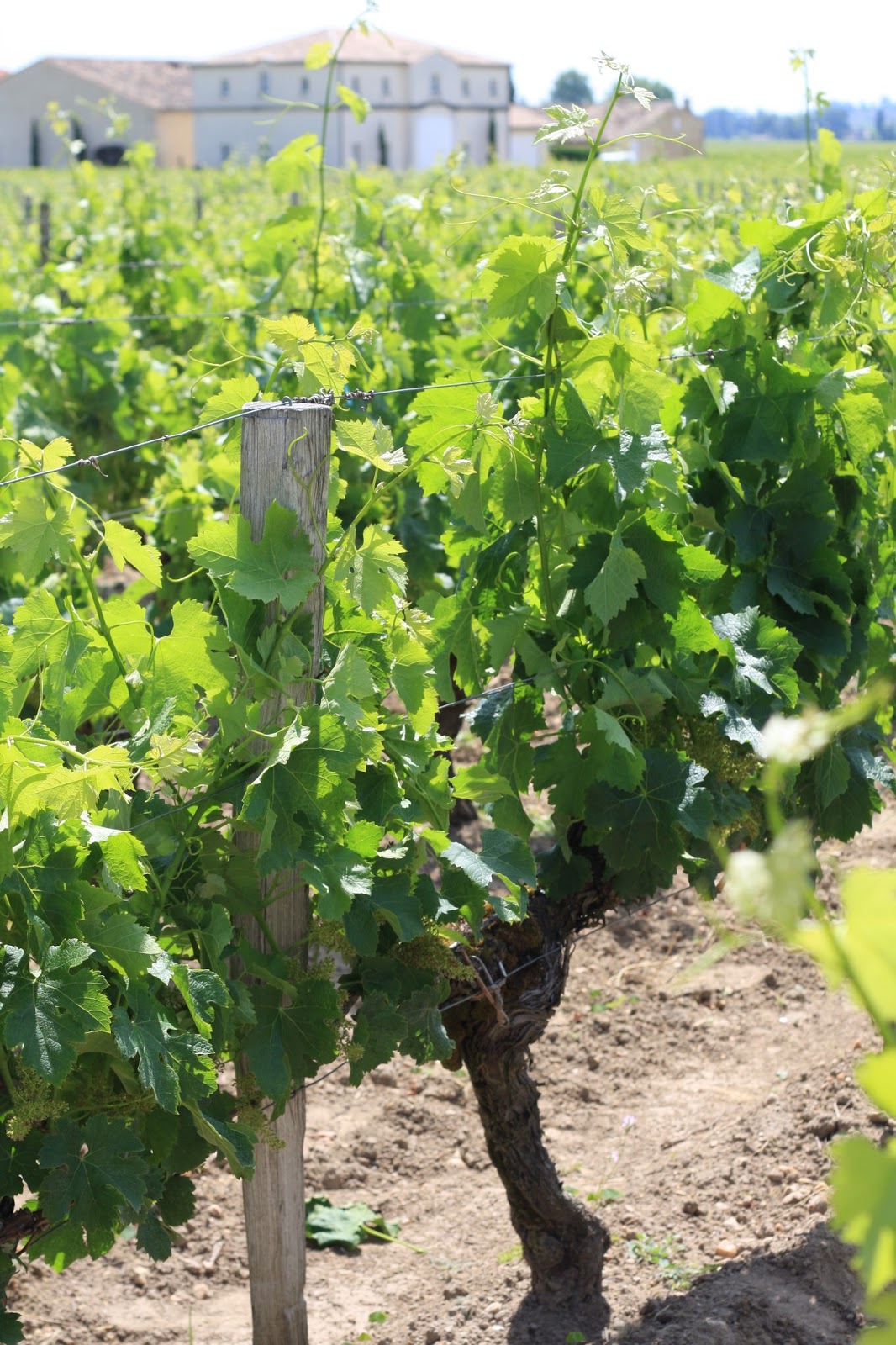
       After some small talk, the first thing we did was head straight to the vineyard so Alexandre could show me around the different plots and vineyard borders. Merlot dominates the plantings with Cabernet France the next most planted and a small, but prevalent Cabernet Sauvignon planting on more gravelly soils than the Merlot which is mostly on a combination of clay and gravel. The older vines were from plots that survived a great frost in the 50's with the rest replanted right after the frost and others planted in more recent decades. You can see the tall steeple of the landmark church that constantly towers high in the landscape as it is the tallest structure in miles. In one direction is Chateau Petrus, to which it shares a large portion of a soil phenomenon know as the clay button that makes up the whole of the Petrus vineyard. In another direction a neighbor is La Conseillante, and across the road is Certan de May, which a century and a half ago was part of the original property called Sertan, which roughly translates to "like a desert" (thank you Neal Martin).
Wooden fermentation tanks

     We moved into the chai ( aka the winemaking facility) where I was surprised to find gorgeous, pristine wood fermentation tanks. Most Chateau use concrete or steel these days in Bordeaux for initial fermentation but not at VCC. We then moved to the first barrel room that housed the newest vintage in barrel. It was small, but of course it should be, this is Pomerol where the properties are tiny and production is a fraction of the giant left bank chateau I had visited earlier on this trip. In the second barrel room lay more barrels with the most recent vintage. A barrel stood upright in the middle of the room with a few open bottles of wine to sample. My anticipation was bubbling over at this point as we were on the cusp of trying some magnificent wine.  The last 30-40 minutes learning about VCC and its sacred vineyards only heightened my excitement.

A sight to behold, 2009, 1996 and 2004 to taste.
     Open before me and Alexandre were vintages 1996, 2004 and the 2009 barrel sample. We started with the 1996, then progressed to the young 2004 and then the embryonic 2009.

     The 1996 was outstanding, one of the best wines I tasted the entire trip. I immediately searched to buy this vintage back home but the choices were few and far between. The few bottles I found the retailer told me were from a so-so lot of wines bought off the gray market and many were not drinking well so I decided to pass on buying them. I am still to this day searching it out! The nose, palate and finish were showing a wine that was past its young stage and well into the middle age of its life. Showing obvious hints of maturity, the wine was in great shape showing expressive and haunting notes that pulled the nose closer to the wine. On the palate I recall the finish lasting for quite a while with a silky and velvety finish, a trademark of well made Pomerol.

The Pomerol church steeple, a common sight from a spot of Pomerol


     The 2004 was less impressive, as some of you may know this is not a favorite vintage of mine. The wines in general lack the evenness and depth I prefer, though the tannins and structure were a good medium to full body on this 2004, the fruit trailing into a more medium body, with decent length and plenty of acidity.

     The 2009 was unlike anything I have ever had. It was an utter wall of fruit, tannin and texture. Practically impervious, dark in color, though it was dim in the chai so color was not exactly something I was evaluating. The aromas were pure, complex, and tightly compact. A lot of coaxing and air, about 30 minutes, and the wine started to unfold. I would have loved to have tried it that night or the next day. The palate was full bodied; solid as a rock, the balance was impeccable but this was not going to give it up to me easily.  Spectacular, I can't wait to try this out of bottle some day.


Beautiful wines, but I preferred the 1996


     We tasted these wines over the course of an hour. We talked through much of it while I also tried to take brief tasting notes on each wine. As I was getting acquainted with the wines I was also getting to know the man behind these wines. We talked about his visits to New York and other parts of the USA, as well as my minimal experience in France so far and the wonderful experiences and people we have encountered thus far on our tour through France. Alexandre is a gentle giant, that tends his vineyard with the care and love that a father has for his children. It shows in the wines and in the meticulous state of the vines that we walked through when we started our walk through the grounds. Since my visit I have purchased almost every vintage from 2008 and on and have my eyes set on a few older vintages when they become available in auctions.

Vieux Chateau Certan is a special wine, made from a special place, and made by a special man.


A biento! 


-Tom


Sunday, June 17, 2012

"The Vineyardist"


"The Vineyardist"
Diamond Mountain
Napa Valley
May 28, 2012


     While researching our trip to Napa, I came across a new wine made by Mark Herold, who made wines in the late 90's and early 00's that garnered a lot of high scores from critics and thus attention from consumers, Merus, Buccella and Kobalt are just a few.  All fruit for this wine is from the estate vineyards high on Diamond Mountain in the northwestern part of the Napa Valley.  Immediately below are the tasting notes from two points in the day as we had a whole bottle over a day.  Notes and photos on the visit follow further below.

Wine opened 11:30am, tasted 1:15pm:

Color: A dark red core, with vibrant red edges.
Nose & palate: Violets, black cherries, red licorice,and black plum. Herbal notes, but in a seasoned sage, dried basil and rosemary way (read: not vegetal). Velvety medium grained tannins amass a nice structure, lending this wine a long finish that is fresh, fresh, fresh from the good acidity this wine has retained!

Tasted at dinner 7pm:
The structure is even bigger as the wine has put on more weight. Many of the flavors are there with more complexity and depth. The black cherry has melded with more cassis notes but the refined herbal notes still add a nice accent, almost seasoning the delicious fruit the wine puts forward.  With food, this would pair superbly with any beef, especially a top prime steak or cabernet braised short ribs.

Lisa and I enjoying the view of Mt. St. Helena

     This past May, my wife and I visited the Napa Valley and toured a lot of old and new wineries.  They had a lot of differences, but one similarity the best wines had was that they did not subscribe to any school per se except the one school that makes great, not just good wine, in the Napa Valley.

     The Vineyardist was actually our last appointment of the vacation and one of our best. It was my first time visiting a winery on Diamond Mountain as there are few places open to the public in this AVA.  I am typically in Oakville or on Spring Mountain, Howell Mountain and Pritchard Hill just to give some perspective.


The historic Victorian House from 1879. This is where the tastings was held.

The "Dream Kitchen" at The Vineyardist
     "The Vineyardist" property is a jewel in the rough.  Tucked way up in the north in western Calistoga, the property is just off Petrified Forest Road.  As we drove through the winding road to the house, you could tell where the focus was at the property:  the vines, the gardens and the house.  The house faced east, overlooking one parcel of the vineyard, with gardens laid out in front welcoming the visitor.


     We were running 30 minutes late and our host Roy Piper stuck around to graciously meet us at the front gate.  Were so glad that Roy waited for us as the grounds, the vineyards and the wine were spectacular and well worth the visit.  The kitchen of the historic reconditioned house was incredible and gave me ideas of how I would like my kitchen to look given this type of incredible opportunity.  The vineyard plots are in 4 or so different sections of the property with different exposures, lending some good diversity in altitude, soil and sun exposure. From the top of the ridge above the house, you can see Sonoma to the west and a perfect view of Mt. Saint Helena to the east.  Then looking southeast you could see Howell Mountain with Viader resting on the eastern slopes of Howell Mountain.  If you turned North, you could make out Peter Michael in Knights Valley off in the distance.  There were various vineyards within view on Spring Mountain to the southwest and in closer proximity on the same Diamond Mountain the cabernet vines of Schramsberg were in view.  Below on the valley floor vines were stretched out in every direction.

     "The Vineyardist" was one of the better cabernet based wines on our trip.  We tasted fabulous wine, talked shop about the wine biz, took home some amazing photos from the beautiful terroir, and met with one of the better hosts we had all week. 

Thanks again Roy!

A bientot!

-Tom
Peter Michael off in the distance in Knights Valley

Viader on the eastern slopes of Howell Mountain
Schramsberg Cabernet vines on Diamond Mountain AVA

My Favorites